
How To Build A Dog Friendly Fence That Actually Works
Summer in Central Florida means your dog spends more time in the yard than any other season. Long daylight hours, backyard cookouts, and kids home from school all add up to a pet that lives outside from morning until dusk. A fence that looked fine in the cooler months gets tested hard in July, and dogs find every weak spot fast. Digging under, jumping over, and squeezing through gaps are the three most common ways dogs escape, and each one is preventable with the right design. Building a dog friendly fence is not about buying the most expensive material; it is about matching height, depth, and layout to your specific dog. Breed, size, energy level, and temperament all change what your fence needs to do. This guide walks through the materials and design features that actually keep dogs contained in Florida yards. It also covers the installation details that separate a fence that works from a fence that fails by August.
Choosing the Right Dog Friendly Fence Materials
The material you choose determines how your dog friendly fence handles chewing, scratching, jumping, and Florida weather all at once. Some materials that work well up north fail quickly in Central Florida humidity, afternoon storms, and intense summer sun. Vinyl, aluminum, chain link, and wood each contain dogs differently, and each has a weakness a determined pet will find. Visual dogs that bark at everything walking by need solid panels, while calm dogs do fine behind open pickets. Chewers destroy soft wood, and diggers defeat any material that stops at ground level. Budget matters too, since a larger yard multiplies every cost per linear foot. The right choice starts with an honest assessment of how your dog behaves outside. From there, the material decision becomes much simpler.
Vinyl Privacy Fencing as a Dog Friendly Fence Option
Vinyl privacy fencing is one of the most popular dog friendly fence choices in Central Florida, and for good reason. Solid vinyl panels block your dog’s view of the sidewalk, which cuts down on fence fighting, barrier frustration, and nonstop barking at joggers and delivery drivers. Dogs that cannot see a trigger usually do not react to it, so reactive dogs often calm down dramatically behind a solid fence. Vinyl also gives dogs nothing to grip, so climbers cannot get a foothold the way they can on chain link or horizontal wood rails. The smooth surface resists chewing better than wood because there are no splinters or soft edges to work loose. Florida weather is another point in vinyl’s favor, since it will not rot, warp, or attract termites in our humidity. Cleanup is simple; a garden hose removes dirt, paw prints, and grime in minutes. For most family dogs, a six foot vinyl privacy fence solves containment and behavior problems in one build.
The main consideration with vinyl is panel strength at the bottom of the fence. Large dogs that throw their body weight against a fence can flex or pop thinner bottom rails, so heavier duty vinyl with reinforced rails is worth the upgrade for big breeds. Quality vinyl products are rated for wind, which matters during Florida’s summer storm season when gusts hit fences hard. Cheap vinyl turns brittle under constant UV exposure and can crack when a dog slams into it, so material grade is not the place to save money. Post depth and concrete footing quality matter just as much as the panels themselves. A vinyl fence set in shallow footings will lean after a few wet season storms, and a leaning fence creates gaps at the bottom. Dogs exploit gaps within days of finding them. Professional installation with properly set posts eliminates that risk from the start.
Vinyl also wins on long term cost for dog owners even though the upfront price is higher than wood. There is no staining, sealing, or painting on a maintenance schedule, which saves hundreds of dollars over the life of the fence. Scratching from paws does not gouge vinyl the way it tears up stained wood, so the fence keeps its appearance in high traffic corners where dogs patrol. Most quality vinyl fencing carries a manufacturer warranty measured in decades rather than years. Repairs are panel based, meaning one damaged section swaps out without rebuilding the whole run. That modular design keeps repair costs predictable if a falling branch or an aggressive digger damages a section. Homeowners with multiple dogs or large breeds get the most value from vinyl because it absorbs daily abuse without showing it. If you want a fence you install once and rarely think about again, vinyl is the strongest candidate.
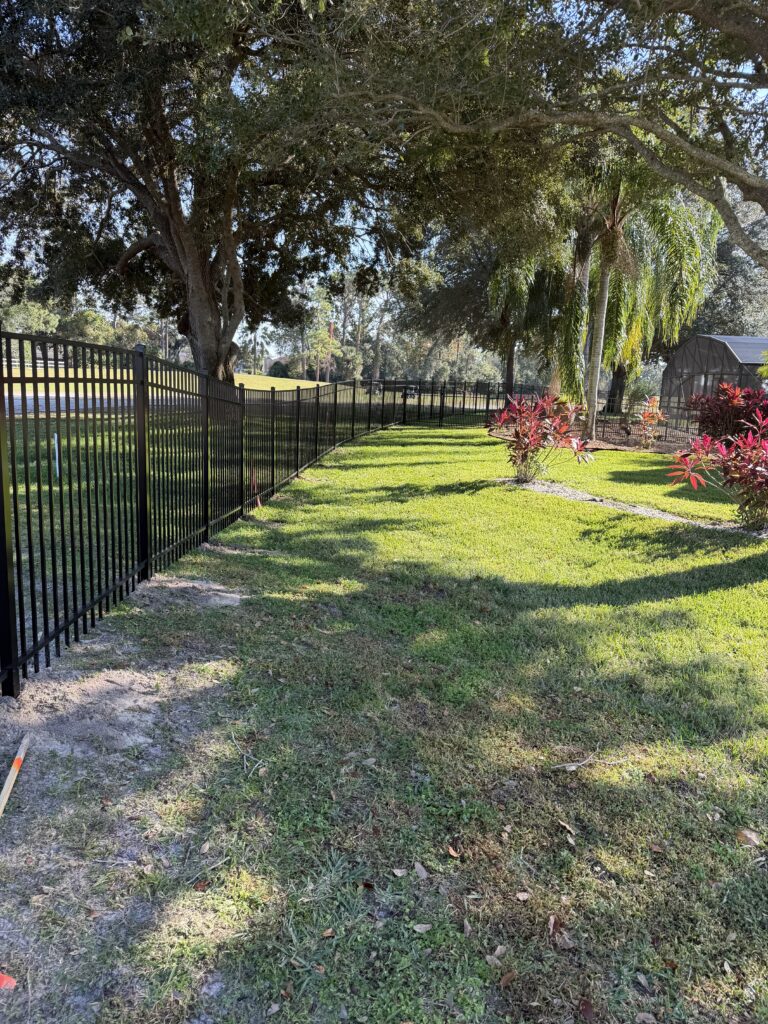
Aluminum and Chain Link Dog Friendly Fence Choices
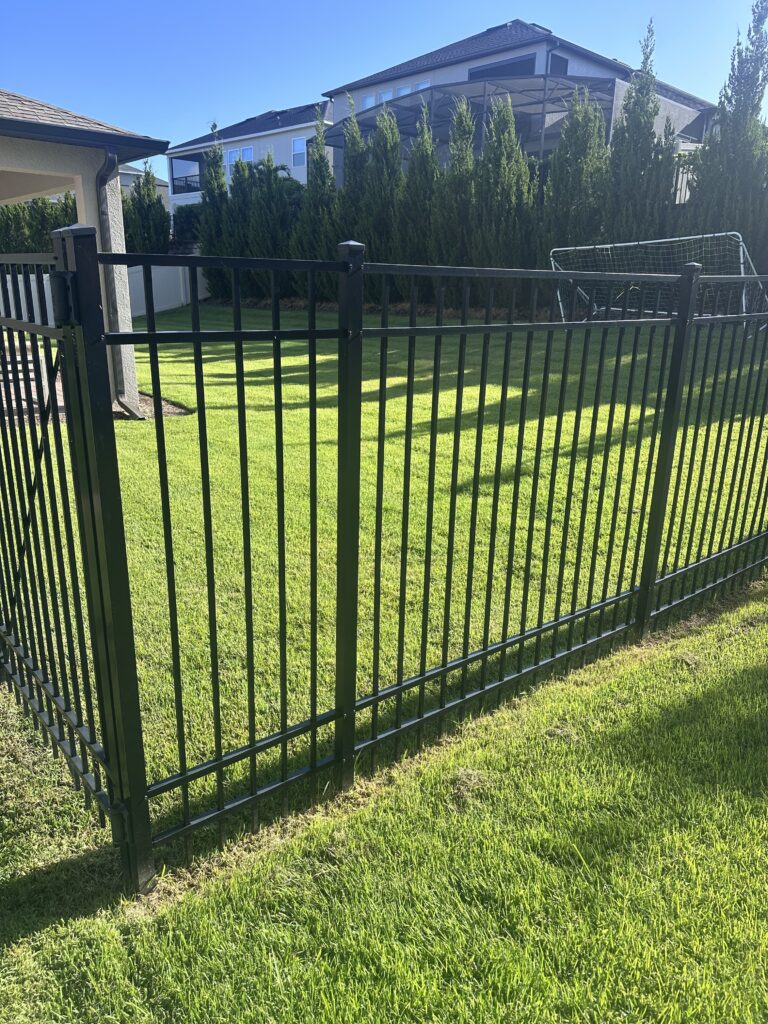
Aluminum and chain link are the two open style options for a dog friendly fence, and they suit very different dogs. Aluminum fencing offers a clean, upscale look with strong vertical pickets that resist chewing completely, since no dog is gnawing through powder coated metal. It never rusts the way steel does, which makes it a smart pick in Florida’s humid climate and around pools. The open design lets breezes flow through the yard, keeping the space cooler for dogs during brutal July afternoons. Calm, well socialized dogs do great behind aluminum because they can see out without losing their minds over every passerby. Picket spacing is the critical detail; small dogs and puppies can slip through standard gaps, so puppy pickets or closer spacing may be required. Aluminum also pairs well with HOA communities that restrict solid fencing. For the right dog, it is a lifetime material with almost zero maintenance.
Chain link remains the budget champion for dog containment, and it has kept dogs in yards for generations. The woven mesh is strong, flexible, and nearly impossible for a dog to break through with body weight alone. It installs quickly, costs less per foot than any other permanent fencing, and handles Florida rain without rotting or warping. Galvanized and vinyl coated versions both resist corrosion, with the coated option adding a softer look in black or green. The tradeoff is that chain link gives climbing dogs a ready made ladder, since the diamond mesh accepts paws easily. Huskies, shepherds, and other athletic escape artists are famous for scaling chain link in seconds. Reactive dogs also see everything through the mesh, which can fuel barking and fence charging. Know your dog before choosing this route.
Both aluminum and chain link share one weakness, and that is visibility in both directions. Your dog sees out, and strangers see in, which some owners consider a safety concern for valuable or friendly dogs. Privacy slats can be woven into chain link to cut visibility, though determined dogs sometimes chew or pull slats loose. Height options help with jumpers, since both materials come in five and six foot versions that stop most breeds. Neither material stops a digger on its own, so buried barriers or concrete curbing along the bottom become essential additions for dogs that excavate. Ground contact is another factor; the bottom rail or tension wire must sit tight to grade with no rolling gaps under it. Uneven Florida lots often need the fence stepped or racked carefully to close low spots. An experienced installer handles those transitions so your dog never finds a gap to test.
Wood Fencing That Works as a Dog Friendly Fence
Wood privacy fencing can absolutely work as a dog friendly fence when it is built and maintained correctly. A six foot board on board or stockade style wood fence blocks sight lines just like vinyl, calming reactive dogs and stopping visual triggers at the property line. Pressure treated pine is the standard in Central Florida because it resists rot and insects far better than untreated lumber. Wood offers real design flexibility too, since pickets, caps, and stain colors can match almost any home style. The solid surface gives jumpers nothing to grab and climbers nothing to scale. For homeowners who love a natural look, nothing else matches the warmth of real wood. Cost sits comfortably between chain link and vinyl, making it a middle ground that fits many budgets. The catch is that wood demands more from you as an owner than any other material.
Dogs are hard on wood in specific, predictable ways. Chewers target picket edges, corner posts, and gate frames, and soft pine gives way to determined teeth over time. Diggers loosen soil at the fence line, which exposes the bottom of pickets to constant ground moisture and speeds up rot. Florida’s humidity and daily summer rain already push wood fences hard, so add a dog and the maintenance clock runs faster. Boards need periodic sealing or staining to survive, usually every two to three years in our climate. Loose or rotted pickets create gaps quickly, and one loose board is an open invitation for a medium sized dog. Inspecting the fence line monthly during summer catches problems while they are still cheap to fix. Skipping that habit is how wood fences fail as dog containment.
Smart construction choices make wood far more dog resistant from day one. Placing rails on the outside of the fence keeps horizontal climbing ledges away from your dog. A kickboard, which is a horizontal board running along the ground, protects picket bottoms from moisture and gives diggers a tougher barrier to defeat. Galvanized ring shank nails or exterior screws hold boards tight even when dogs slam into panels during zoomies. Concrete set posts at proper depth keep the whole structure rigid through storm season. Gate hardware deserves heavy duty hinges and a self closing mechanism, because gates are the most common escape point on any wood fence. If your current wood fence already has rot, gaps, or leaning sections, repairs may restore containment without a full rebuild. Need a sagging fence fixed before your dog finds the weak spot? Click here for our fence repair service.
Dog Friendly Fence Design Features That Stop Escapes
Material is only half of a dog friendly fence; design features determine if your specific dog stays inside it. Dogs escape three ways, and those are over, under, and through, so every effective design closes all three routes. Height stops jumpers, buried barriers stop diggers, and tight construction with secure gates stops squeezers and door dashers. Florida yards add their own challenges, including sandy soil that digs easily, uneven grades that create bottom gaps, and summer storms that loosen posts. Landscaping matters too, since a picnic table or air conditioning unit pushed against a fence becomes a launch pad. Smart owners walk their yard like a dog would, looking for anything that shortens the effective fence height or softens the ground at the fence line. The features below are the ones that consistently work. Build them in from the start and you will not chase your dog down the street in August heat.
The Right Height for a Dog Friendly Fence
Fence height is the single most debated question in dog containment, and the honest answer depends on your dog’s athletic ability. Small breeds under twenty pounds are usually contained by a four foot fence, since their vertical leap simply cannot clear it. Medium dogs like beagles, border collies, and pit bull mixes generally need five feet, and many owners go to six for insurance. Large athletic breeds, including German shepherds, huskies, Belgian Malinois, and greyhound mixes, need a full six foot fence at minimum. Some exceptional jumpers clear six feet flat footed, which is rare but real. Watch how your dog moves before deciding; a dog that pops onto the kitchen counter effortlessly is telling you something about fence height. Age matters as well, since a puppy that respects four feet today may grow into a dog that clears it at eighteen months. Building taller than you think you need is almost always cheaper than replacing a fence later.
Effective height is different from measured height, and that distinction catches many owners off guard. A six foot fence with a doghouse, firewood stack, planter, or grill beside it might offer an effective jump of only three feet. Dogs are clever about using intermediate platforms, and they learn escape routes by watching the yard. Keep a clear zone of at least three feet inside the fence line with nothing climbable in it. Sloped yards create the same problem, because the uphill side of a fence is effectively shorter from the dog’s takeoff point. Retaining walls, tree stumps, and even packed dirt mounds all reduce effective height. Summer is when this matters most, since patio furniture and pool toys migrate around the yard constantly. A quick weekly walk of the fence line keeps launch pads out of play.
For confirmed jumpers and climbers, height extensions and deterrents close the gap. Angled extensions that lean inward at forty five degrees stop climbers because dogs cannot navigate an overhang. Coyote rollers, which are spinning bars mounted along the top rail, deny paws a grip point at the summit and work remarkably well on athletic breeds. Solid fence styles beat open styles for jumpers too, since dogs judge jumps better when they can see the landing zone; a solid six foot panel is psychologically harder to attempt. Smooth materials like vinyl already remove footholds, so pairing vinyl with proper height solves most jumping problems outright. Local codes and HOA rules in the Winter Garden area often cap residential fence height at six feet, so extensions must be planned within those limits. A professional installer knows what your municipality allows. Getting that answer before you build saves expensive rework.
Dig Proof Barriers for a Dog Friendly Fence
Digging is the escape method Florida owners underestimate most, because our sandy soil makes excavation almost effortless for a motivated dog. Terriers, dachshunds, huskies, and most hounds dig instinctively, and a dedicated digger can tunnel under a fence in a single afternoon. Summer makes it worse; dogs dig cool beds in hot weather, and a cooling hole near the fence line quickly becomes an escape tunnel. The fence bottom is the battlefield, so a dog friendly fence in Central Florida needs a real barrier below grade. Surface level fixes like piling rocks rarely last, since dogs simply push them aside or dig around them. Effective solutions extend the fence line downward or outward so digging leads nowhere. The good news is that dig proofing is affordable when it is planned during installation. Retrofitting later costs more and usually happens after at least one escape.
The most reliable dig barrier is an L footer, which is wire mesh attached to the fence bottom and bent outward along the ground for one to two feet. Dogs dig at the fence line, hit mesh, and cannot figure out that backing up would let them dig around it. The mesh can lay on the surface pinned with landscape staples, or sit under a few inches of soil and sod so it disappears visually. Galvanized or coated welded wire lasts for years in Florida conditions. A second option is a concrete curb or mow strip poured along the fence line, which stops digging permanently and makes lawn trimming easier at the same time. Buried barriers work too, with the fence material or added mesh extending twelve or more inches below grade. Each approach beats the fill and hope method, where owners refill holes daily while the dog digs faster. Pick one barrier and install it along the entire run, not just where digging started.
Ground gaps deserve the same attention as deliberate digging. Central Florida lots are rarely level, and a fence built in straight horizontal lines across a sloped yard leaves triangular gaps at the low points. Small and medium dogs flatten themselves and slide through gaps as short as four inches. Racked or stepped fence installation follows the grade so the bottom rail stays tight to the ground along the whole run. Erosion from summer downpours can open new gaps under a fence that started tight, especially where roof runoff or gutter discharge crosses the fence line. Check those washout zones after heavy storms during the rainy season. Fill and compact eroded areas promptly, or add curbing where water repeatedly cuts channels. A fence line that stays sealed at the bottom removes the easiest escape route most dogs ever find.
Gates and Latches That Keep a Dog Friendly Fence Secure
Gates are the weakest point on any dog friendly fence, and most real world escapes happen there rather than over or under a panel. A gate left ajar for thirty seconds is all a door dashing dog needs, and summer traffic through the yard makes that risk constant. Pool guys, lawn crews, kids with friends, and cookout guests all use the gate more between June and September than the rest of the year combined. Hardware quality decides how forgiving those moments are. Self closing hinges pull the gate shut automatically after every pass, removing human memory from the equation. Self latching hardware then secures the gate without anyone touching it. Together, those two upgrades prevent the single most common cause of lost dogs. They cost little compared to the fence itself and pay for themselves the first time someone forgets.
Latch selection matters more with clever dogs than most owners realize. Simple gravity latches can be nosed open by dogs that watch humans operate them, and plenty of retrievers and shepherds learn latches by observation. Two step latches, which require lifting and pulling in sequence, defeat nearly every dog. Lockable latches add security against human intrusion too, protecting dogs from theft, which is a genuine concern for purebred and designer breeds. Mount latches high on the gate so paws and noses cannot reach them at all. Padlocks or combination locks make sense on gates facing alleys or streets. Check latch alignment seasonally, because Florida heat and moisture swell wood gates and shift vinyl slightly, letting a latch stop catching cleanly. A latch that requires a slam to engage is a latch that will eventually be left open.
Gate construction and placement round out the security picture. Gate frames take more stress than any fence panel, since they swing thousands of times per year and get pushed by excited dogs, so welded steel frames or reinforced vinyl frames outlast basic wood builds dramatically. The gap under a gate should match the fence line, meaning no more than two inches of clearance, and a threshold board or concrete pad under the gate blocks digging at this high pressure spot. Double gate systems, sometimes called airlocks, add a second layer for chronic escapers by creating a small enclosed area between two gates. Placing gates in visible locations rather than hidden side yards means an open gate gets noticed quickly. Consider gate width during planning as well, since a four foot gate handles mowers while a wider drive gate handles trailers. Planning gates during a full installation keeps the whole system consistent. Ready to design a fence with escape proof gates built in? Click here for our fence installation service.
Why You Need a Professional Dog Friendly Fence Installation
A dog friendly fence only works when every post, panel, gate, and barrier performs together as a system. One shallow post, one misaligned latch, or one gap at grade undoes everything else, and dogs audit fences more thoroughly than any inspector. Professional installation gets the depth, alignment, and hardware right the first time, in soil conditions that Central Florida installers know intimately. Permits, property lines, and HOA requirements also come into play on most fence projects in the Winter Garden area. Summer is peak escape season, with fireworks, thunderstorms, and busy yards all pushing dogs to test boundaries. Getting the fence built correctly before those pressures hit is the whole point.
The Risks of a DIY Dog Friendly Fence
DIY fence projects fail dogs in ways that are invisible until the escape happens. Posts set too shallow in sandy Florida soil lean after the first serious storm, opening gaps at panel joints and along the ground. Homeowners often skip the dig barrier entirely because the fence looks finished without it. Picket spacing errors of even an inch let small dogs squeeze through. Gate hardware from the bargain bin sags within months and stops latching cleanly. Each small shortcut becomes an exit your dog will eventually find.
Property line mistakes create a second category of DIY risk. Building even a few inches onto a neighbor’s land can force a court ordered removal of the entire fence. Utility lines run shallow in many Central Florida neighborhoods, and post holes dug without locating services can hit irrigation, cable, or worse. Local codes regulate fence height, style, and setbacks, and HOA architectural boards add another approval layer in most Winter Garden communities. Unpermitted fences can trigger fines and forced modifications. A weekend project can turn into a legal headache that costs more than professional installation ever would.
Time and physical difficulty round out the DIY problem. Digging thirty post holes by hand in July heat is brutal, dangerous work in Florida’s humidity. Concrete must be mixed, poured, and cured correctly for every single post, and rushing cure times produces loose posts. Panels must be leveled and racked across uneven ground, which takes experience to do cleanly. Most DIY fences take multiple weekends, leaving the yard unsecured and the dog on a leash the entire time. Professionals finish most residential fences in one to three days with warrantied results.

How Professional Installation Makes a Dog Friendly Fence Last
Professional installers build for the dog and the climate at the same time. Posts get set below grade in properly sized concrete footings that hold through storm season and resist the leverage of a large dog hitting panels at speed. Panel bottoms get fitted tight to grade with racking or stepping matched to your lot’s actual slope. Dig barriers, kickboards, and gate thresholds get integrated during construction instead of bolted on later. Hardware gets selected for coastal humidity so hinges and latches keep working for years. The result is a containment system, not just a line of panels.
Material guidance is another advantage owners rarely get from a big box store aisle. An experienced fence contractor asks about your dog’s breed, size, and habits before recommending anything. A husky household gets steered away from climbable chain link; a reactive dog household hears the case for solid privacy panels. Grade of vinyl, treatment level of lumber, and picket spacing all get matched to the animal that will test them daily. That fit between dog and fence is what makes the project actually work. Guessing at those decisions is how owners end up buying two fences.
Warranty and accountability complete the professional advantage. Reputable installers stand behind workmanship, so a post that shifts or a gate that sags gets corrected without a new bill. Manufacturer warranties on vinyl and aluminum typically require professional installation to remain valid. Documentation of permits and property surveys protects you during any future dispute or home sale. An old failing fence can often be assessed for full replacement with dog friendly upgrades built into the new design. Is your current fence too far gone to save? Click here for our fence replacement service.
Why Choose Fence Pros for Your Dog Friendly Fence
Fence Pros builds fences for Central Florida dogs and Central Florida weather, because we work in both every single day. Our team is based at 700 Tangelo Ct in Winter Garden, and we serve homeowners within an hour of our shop, including Ocoee, Windermere, Horizon West, Clermont, Apopka, and Kissimmee. We install vinyl, wood, aluminum, and chain link fencing engineered for sandy soil, summer storms, and relentless humidity. Every project starts with questions about your dog, your yard, and your goals. That conversation shapes the height, material, and barrier plan we recommend. We build fences that contain dogs, not just fences that look like they should.
Our reputation is built on clean work, strong builds, and long term results. We set posts deep, seal fence lines tight to grade, and install gate hardware that still latches perfectly years later. Residential and commercial customers across the Orlando area trust us because we treat every yard like our own dog lives in it. We are dedicated to providing consistent five star service on every project, from the first estimate to the final walkthrough. Our crews clean up completely, so your dog steps into a safe yard the day we finish. That standard does not change based on project size or budget.
Getting started is simple, and it costs nothing to find out what your yard needs. We offer free estimates on all fence projects, including new installations, repairs, and full replacements. A team member will walk your property, discuss your dog’s habits, and give you a clear plan with straightforward pricing. Summer is our busiest season, so scheduling early gets your dog secured before the next round of thunderstorms and fireworks. Call Fence Pros today at (407) 580-8353 or email info@fenceprosorlando.com to book your free estimate. Your dog deserves a fence that actually works, and we build exactly that.