
The Best Privacy Fences For Backyard Pools And Hot Tubs
Florida summers turn backyard pools and hot tubs into the main attraction, and a privacy fence makes those spaces feel like a true retreat. Homeowners in Winter Garden, Windermere, and Horizon West rely on strong fencing to block neighbors’ views, deflect wind, and meet pool barrier rules under Florida law. The right privacy fence does three jobs at once. It protects swimmers, raises curb appeal, and adds long-term value to the property. Florida weather is rough on materials, so the fence has to handle humidity, salt air, intense UV, and afternoon thunderstorms. Picking the wrong style or material leads to fast rot, warped boards, and rust streaks. This guide walks through the top privacy fence options for pools and hot tubs in Central Florida. Each section breaks down material strengths, height rules, and design tips that work in our climate.
Top Privacy Fence Materials For Florida Backyard Pools And Hot Tubs
Material choice drives everything when it comes to a pool privacy fence. Florida heat, daily rain, and pool chemicals all attack fence panels in ways that other climates never see. A backyard fence near a pool deals with constant splash, chlorine drift, and saltwater overspray on screened lanais. The best privacy fence materials resist moisture, hold up to UV rays, and stay strong through hurricane season. Vinyl, aluminum, and pressure-treated wood lead the pack for pool areas in Winter Garden and the surrounding cities. Each one offers a different look, a different price point, and a different lifespan. Knowing the trade-offs helps homeowners pick the right fit for their backyard pool or hot tub setup.
Vinyl Privacy Fences For Backyard Pools And Hot Tubs
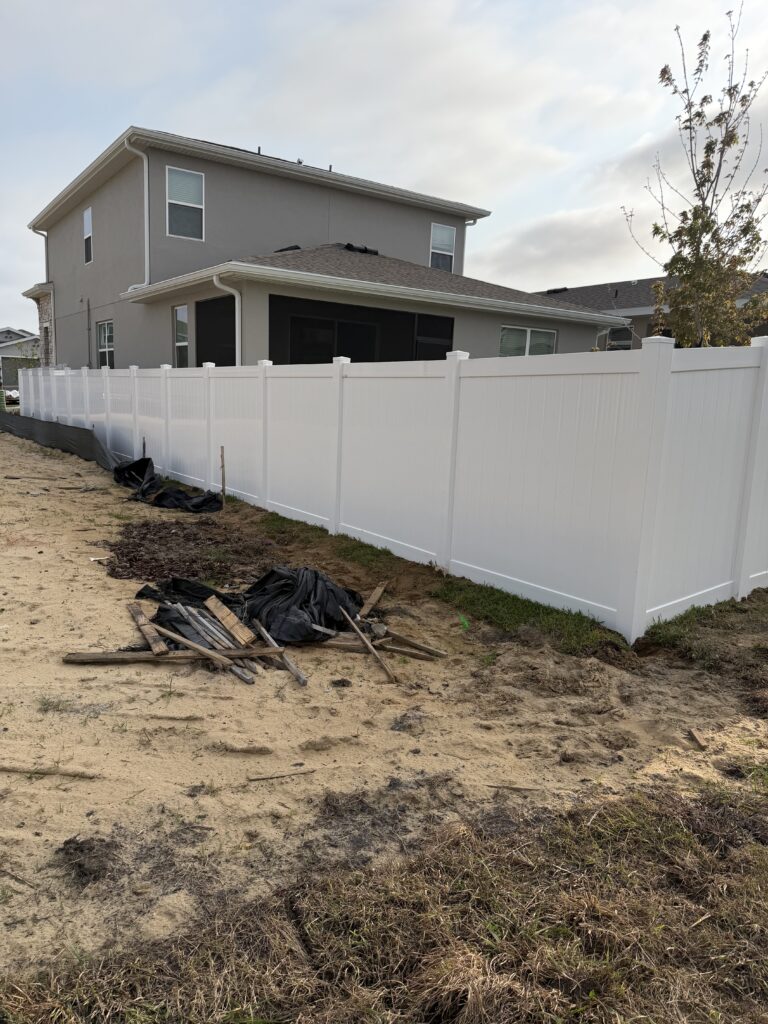
Vinyl is the top pick for most pool privacy fences in Central Florida, and the reasons stack up fast. Vinyl panels never rot, never need paint, and never absorb pool water or chlorine. The surface wipes clean with a garden hose, which matters when splash leaves chemical residue along the fence line. Most vinyl privacy panels come in six-foot or eight-foot heights, giving full sight blockage from neighbors and second-story windows. The thick tongue-and-groove boards stop wind from whistling through, so the pool deck stays calm on breezy afternoons. UV inhibitors built into quality vinyl keep the panels from yellowing or chalking in the Florida sun.
Color options for vinyl pool fences run from bright white to tan, gray, and even wood-grain finishes. White vinyl reflects heat, which keeps the fence cooler to the touch around a hot tub deck. Tan and almond shades blend well with pavers and screened enclosures common in Winter Garden homes. The hollow-core posts get reinforced with steel or aluminum inserts when used along pool barriers, adding strength against pool toys, lawn equipment, and storm debris. Vinyl meets the four-foot minimum height for pool barrier code in Florida when ordered correctly. Many pool builders pair vinyl with self-closing, self-latching gates to satisfy local permit inspectors.
The cost of vinyl runs higher than wood up front, but the long-term math works in the homeowner’s favor. A quality vinyl privacy fence lasts 25 to 30 years with almost no maintenance. Wood fences in the same spot might need replacement every 8 to 12 years due to rot at the base. Vinyl also handles hurricane winds well when installed with proper post depth and concrete footings. Hot tub owners like vinyl because it traps heat near the soak area without absorbing humidity. Need a new pool fence installed? Click here for our fence installation service.

Aluminum Privacy Fences For Backyard Pools And Hot Tubs
Aluminum fences bring a sleek, modern look to backyard pools and hot tubs, especially in newer Horizon West and Dr. Phillips neighborhoods. The metal never rusts, never rots, and never warps in Florida heat. Powder-coated finishes resist fading, scratching, and chipping for decades. Standard aluminum picket fences alone do not provide full privacy, so homeowners often choose aluminum with privacy slats inserted between the pickets. These slats fill the gaps and block sightlines while keeping the lightweight, airy feel of metal fencing. Aluminum panels also allow more airflow than solid vinyl or wood, which helps move humidity away from the pool deck.
Pool code compliance is one of aluminum’s strongest points. Aluminum pool fencing meets Florida pool barrier requirements with vertical pickets spaced no more than four inches apart. The four-foot minimum height comes standard, with six-foot options for added privacy. Self-closing, self-latching gates pair with aluminum frames easily, and the metal handles the daily slamming of summer pool traffic. Aluminum will not corrode from pool chlorine splash or saltwater systems, making it a safe long-term match for screened-in lanais and open pool decks. The fence stays cool to the touch better than wood and far better than dark vinyl.
Aluminum privacy fences cost more per linear foot than vinyl or wood, but the lifespan stretches 40 years or more. The panels arrive pre-assembled, which speeds up installation on flat lots common across Winter Garden and Ocoee. Sloped yards in Clermont and Minneola work well with rackable aluminum panels that follow grade changes without leaving gaps under the fence. Aluminum also pairs nicely with stone columns, brick pillars, or stucco walls for a high-end pool enclosure look. Hot tub privacy walls built from aluminum panels stay clean, straight, and rust-free year after year. The look fits modern homes, traditional homes, and Mediterranean styles found across the Orlando metro.
Wood Privacy Fences For Backyard Pools And Hot Tubs
Wood remains the classic privacy fence choice, and it still works well around pools and hot tubs when built correctly. Pressure-treated pine is the most common wood used in Central Florida pool fences. The treatment process forces preservatives deep into the boards, helping the wood resist rot, termites, and fungus. Cypress and cedar offer natural rot resistance and a richer color, though they cost more than pine. A six-foot board-on-board or shadowbox style gives full privacy while letting air pass through, which matters near a humid pool deck. Wood fences also block wind, dampen pool pump noise, and frame the backyard with a warm, natural look.
The finish on a wood pool fence makes or breaks its lifespan. Florida sun bleaches untreated wood gray in just a few months, and constant pool splash speeds up moisture damage. Sealing the wood with a quality water-repellent stain every two to three years protects the boards from cupping, cracking, and rot. Posts set in concrete with proper drainage gravel at the base last far longer than posts buried in dirt alone. Galvanized or stainless-steel fasteners prevent rust streaks that would otherwise run down white or light-stained boards. A well-built wood fence around a pool can last 12 to 15 years with regular care.
Wood costs less per linear foot than vinyl or aluminum, making it the budget-friendly pick for large backyard pool perimeters. Custom heights, lattice tops, and decorative post caps give wood fences a personalized look. Hot tub privacy screens built from wood feel warm and cabin-like, fitting well with paver patios and tropical landscaping. Wood does need more upkeep than vinyl or aluminum, so homeowners should plan for periodic staining, board replacement, and hardware checks. Pool chemicals can stain or weaken wood over time, so spacing the fence a few feet back from the pool edge helps. Thinking about a fresh wood fence around your pool? Click here for our fence replacement service.
Florida Pool Code Rules For Privacy Fences Around Backyard Pools And Hot Tubs
Florida takes pool safety seriously, and privacy fences around pools must meet strict barrier rules under the Residential Swimming Pool Safety Act. A pool fence is not just for privacy; it is a legal safety barrier that prevents drowning, especially for young children. Cities like Kissimmee, Apopka, and Casselberry enforce these rules during permit inspections, and a fence that fails inspection holds up the entire pool project. Knowing the code before picking a fence saves time, money, and rework. The rules cover height, gaps, gates, latches, and the placement of climbable objects near the fence. Following them keeps the homeowner safe from liability and keeps insurance premiums in line.
Pool Barrier Height Rules For Privacy Fences Around Backyard Pools And Hot Tubs
Florida law sets the minimum pool barrier height at four feet measured from the ground on the outside of the fence. Most homeowners go taller for true privacy, with six-foot fences being the most common choice for backyard pools. Hot tub privacy screens often run six or even eight feet tall to block views from upstairs windows next door. The four-foot rule applies to the pool side of the fence, so any landscaping, planters, or AC units that could be climbed must stay back from the barrier. Local code in Orange, Lake, Seminole, and Osceola counties may add extra height requirements for specific zoning districts.
Measuring the height correctly matters during inspection. The four-foot minimum is checked from the finished grade, not from a step, slope, or mulch bed. Fences installed on retaining walls or raised beds may need extra height to meet the rule on the outside face. Gaps between vertical pickets cannot exceed four inches, which keeps small children from squeezing through. The gap between the bottom of the fence and the ground cannot exceed two inches in most jurisdictions. Solid privacy panels in vinyl or wood handle these spacing rules easily since they have no gaps at all.
Tall privacy fences also block wind, sun glare, and noise around the pool deck. A six-foot vinyl or aluminum fence stops most sightlines from neighboring two-story homes common in Four Corners and Davenport. Hot tub users get a private soak space without curtains or umbrellas. Pool pump and heater equipment can be tucked behind the fence line, hiding them from view while still allowing service access through a locked gate. Builders often add a few inches of height above the minimum to account for grade settling over time. A well-planned pool privacy fence protects the family and the property for decades.
Pool Gate Rules For Privacy Fences Around Backyard Pools And Hot Tubs
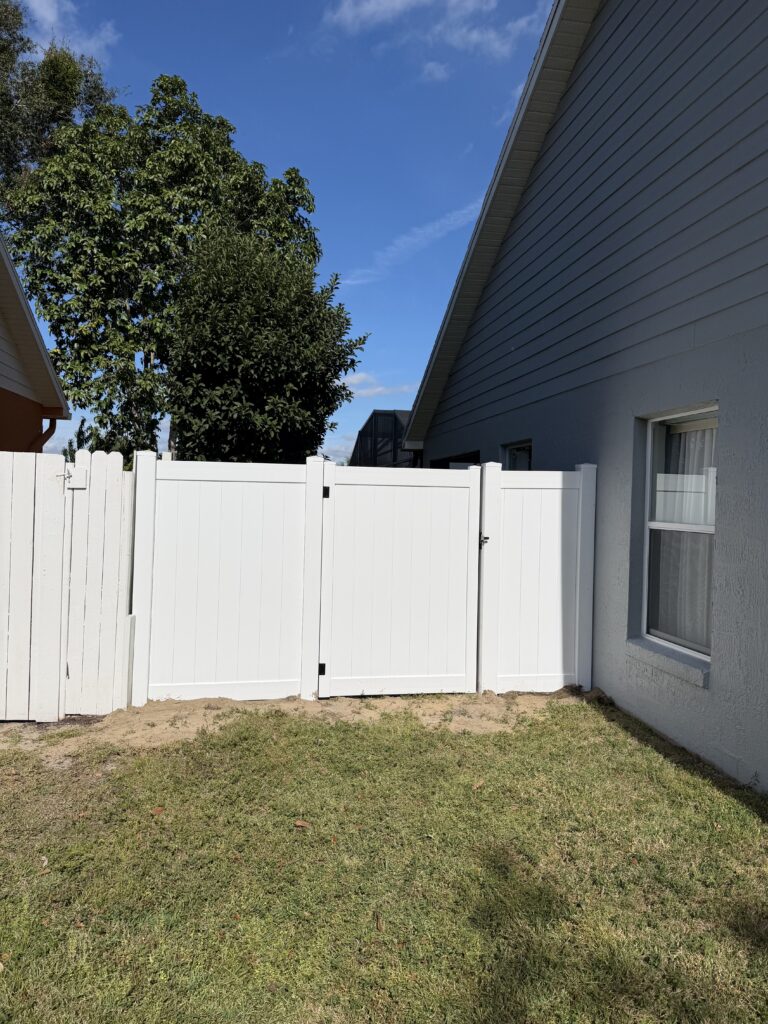
Gates are the most inspected part of any pool privacy fence in Florida. Every gate must be self-closing, meaning it swings shut on its own without help. It must also be self-latching, with a latch positioned at least 54 inches above the ground on the pool side. The gate must open outward, away from the pool, so a child pushing on it cannot accidentally fall into the water. These rules apply to every gate in the pool barrier, including side yard gates, pool deck gates, and gates leading to the hot tub area. Skipping any one of these features means a failed inspection.
Hardware quality matters as much as the gate itself. Florida heat, humidity, and salt air destroy cheap hinges and latches within a year or two. Stainless-steel or marine-grade aluminum hardware lasts the longest near a pool. Magnetic latches with key locks add an extra safety layer, especially for homes with young children or frequent guests. Self-closing hinges with adjustable tension keep the gate shutting firmly even after years of use. Pool service technicians, lawn crews, and pool cleaners all use the gate often, so the hardware needs to handle daily traffic.
Gate placement also matters for code and convenience. Most pool gates open from the side yard or the back patio, giving easy access for the family while still controlling entry. Hot tub privacy enclosures often have a single self-closing gate that doubles as the pool barrier entry. Builders avoid placing gates near climbable features such as benches, planters, pool equipment, or AC units. A clear five-foot buffer around the gate keeps children from getting a boost over the fence. Want help getting your pool gate up to code? Click here for our fence repair service.
Permit Rules For Privacy Fences Around Backyard Pools And Hot Tubs
Every city in our service area requires a permit for a new pool privacy fence, and most require one for replacement fences too. The permit process includes a site plan showing fence location, height, materials, and gate placement. Setback rules vary by city, with most requiring the fence to sit at least a few feet inside the property line. HOA approval is often required on top of city permits, especially in newer communities across Horizon West and Winter Garden. Skipping permits leads to fines, stop-work orders, and forced removal of non-compliant fencing.
The inspection process happens after the fence is built. Inspectors check height, gap spacing, gate function, latch height, and barrier continuity. Any failure means the fence must be corrected before the pool can be filled or used. Pool builders often coordinate fence installation with the pool permit timeline so everything passes inspection on the same visit. Fence Pros works directly with permit offices in every city we serve, including Mascotte, Oakland, and Pine Hills. Knowing each city’s small rule differences keeps projects moving without delay.
Existing fences sometimes need upgrades when a new pool or hot tub gets added. An older four-foot picket fence may not meet the four-inch gap rule, requiring slats or replacement. Wood fences with rotted boards near the gate often fail inspection due to height or gap issues. Adding a pool to a home with an existing fence usually triggers a code review of the full barrier. Fence Pros inspects existing fencing during the estimate, flagging any code issues before work begins. This avoids costly surprises during the pool permit process.
Why Fence Pros Builds The Best Privacy Fences For Backyard Pools And Hot Tubs
Picking the right contractor matters as much as picking the right material. A pool privacy fence has to meet code, withstand Florida weather, and look great for decades. Fence Pros installs pool fences across Winter Garden, Clermont, Kissimmee, and every city in between. Brad Jackson and the team know the local permit rules, the soil conditions, and the weather patterns that affect every install. Free estimates make it easy to plan the project without pressure. Strong builds and clean work keep customers coming back and referring neighbors.
Free Estimates For Privacy Fences Around Backyard Pools And Hot Tubs
Every pool privacy fence project starts with a free, no-pressure estimate. Brad or a team member visits the property, measures the yard, and walks through material options. Pool code questions, HOA rules, and budget concerns all get addressed during the visit. The estimate includes material costs, labor, gate hardware, and permit fees in one clear price.
No hidden charges show up later in the project. Homeowners get a full breakdown of vinyl, aluminum, and wood options with pros and cons for their specific pool layout. Lead times, install dates, and warranty terms get explained up front. The estimate stays good long enough for the homeowner to compare quotes and make a confident choice.
Free estimates also cover hot tub privacy screens, partial pool enclosures, and full backyard perimeter fencing. Fence Pros serves every city within a one-hour drive of Winter Garden, including Altamonte Springs, Forest City, and Casselberry. Same-week estimate visits are common during the busy spring and summer pool season. Calling early in the project gives the best chance at the preferred install date.
High Quality Fence Materials For Privacy Fences Around Backyard Pools And Hot Tubs
Fence Pros uses only materials built for Florida weather. Vinyl panels come from manufacturers with UV inhibitors, steel-reinforced posts, and full lifetime warranties. Aluminum fencing arrives powder-coated for fade resistance and corrosion protection. Pressure-treated wood gets sourced from suppliers who follow proper kiln-drying and treatment standards.
Hardware quality matches the fence quality. Stainless-steel screws, marine-grade hinges, and code-compliant latches go on every pool gate. Posts get set in concrete with proper depth for hurricane wind ratings. Every panel gets squared, leveled, and locked in place for a clean finished look. Cheap materials never make it onto a Fence Pros job site.
Florida weather tests every fence within months of install. Salt air near the coast, daily summer rain, and afternoon sun all attack lesser materials fast. Fence Pros builds for the long haul, with products that hold up through hurricane season and beyond. Pool owners get a fence that still looks new five, ten, and fifteen years later.
Why Choose Fence Pros For Privacy Fences Around Backyard Pools And Hot Tubs
Fence Pros is owned and operated by Brad Jackson, who runs every job with a focus on clean work and strong builds. Five-star service is the standard, not the exception. Residential and commercial pool projects across Winter Garden, Ocoee, and Windermere get the same attention to detail. Crews show up on time, clean up at the end of the day, and treat the property with respect.
Pool privacy fences from Fence Pros come with strong warranties and honest aftercare. Any code issue, hardware question, or weather damage gets handled quickly. The same crew that installed the fence is the crew that comes back for service. That continuity keeps quality high and keeps customers happy.
Serving Winter Garden and surrounding areas within one hour means fast response on estimates, installs, and follow-up visits. From the first call to the final inspection, Fence Pros delivers consistent five-star service. Backyard pools and hot tubs deserve a privacy fence that lasts. Reach out today for a free estimate and a build done right.