
The Truth About Shadow Box vs Board On Board Fences
Homeowners across Central Florida ask us the same question every week: what is the real difference between a shadow box fence and a board on board fence? Both styles look similar from the street, and both promise privacy, but they perform very differently once they are standing in your yard. The confusion is understandable because many fence companies use these terms loosely or even interchangeably. That mislabeling leads to buyers paying for one style and receiving another. This guide breaks down how each fence is built, how much privacy each one actually provides, and how each style holds up in Florida heat, rain, and wind. Summer is peak fence season in the Orlando area, and it is also the season when privacy matters most, since families spend more time in the pool and on the patio. By the end of this article, you will know exactly which fence style fits your property, your budget, and your privacy goals. If you want a professional opinion on your specific yard, click here for our fence installation service.
Shadow Box Fence vs Board On Board Fence: How Each Style Is Built
The construction method is the single biggest difference between a shadow box fence and a board on board fence, and it affects everything else, including price, privacy, and lifespan. A shadow box fence alternates pickets on opposite sides of the horizontal rails, creating a pattern that looks identical from both sides. A board on board fence places overlapping pickets on the same side of the rails, closing every gap completely. Both styles are usually built from pressure treated pine, cedar, or vinyl here in Central Florida. Both also share the same skeleton: posts set in concrete, two or three horizontal rails, and vertical pickets. The difference lies entirely in how those pickets are arranged. Understanding that arrangement will help you see through misleading sales pitches and choose the right fence the first time.
How a Shadow Box Fence Is Constructed
A shadow box fence, sometimes called a good neighbor fence, staggers its pickets on alternating sides of the rails. The builder attaches one picket to the front of the rail, leaves a gap slightly narrower than a picket, then attaches the next picket to the back of the rail so it covers that gap from the opposite plane. When you stand directly in front of the fence, the staggered boards appear to form a solid wall. The pattern repeats down the entire fence line, giving both your yard and your neighbor’s yard the same finished appearance. That two sided appeal is the main reason HOAs in Winter Garden, Horizon West, and Windermere often favor this style. There is no ugly rail side facing anyone, which keeps disputes over fence orientation off the table. Builders also appreciate that the design uses slightly fewer pickets than a fully overlapped fence. The result is a fence that looks premium from every angle without the material cost of full overlap.
The gaps in a shadow box fence are intentional, and they serve a real purpose in the Florida climate. Air passes between the staggered pickets, which reduces wind load on the posts during summer thunderstorms and tropical systems. That airflow also helps the boards dry faster after our daily afternoon rains, which slows down rot and mildew. Wood pickets expand and contract with humidity, and the built in spacing gives each board room to move without warping against its neighbor. In a region where July humidity regularly sits above 70 percent, that breathing room matters. A fence that traps moisture between tight boards will cup, twist, and split years sooner than one that ventilates. Shadow box construction essentially works with Florida weather instead of fighting it. Many of the oldest wood fences still standing in older Orlando neighborhoods are shadow box for exactly this reason.
Proper shadow box construction still demands skill, and shortcuts show up fast. The picket spacing must be consistent, because uneven staggering creates sightlines straight through the fence. Rails need to be sized to carry pickets on both faces, so undersized two by threes will sag under the double sided load. Fasteners matter too; ring shank nails or exterior screws hold staggered pickets far better than smooth nails that back out as the wood moves. Posts should be set at least two feet deep in concrete to resist the leverage of a six foot panel in gusty weather. A poorly built shadow box fence loses its privacy illusion within a year as boards shift and gaps widen. A properly built one keeps its clean, uniform look for well over a decade. This is why hiring an experienced crew matters more with shadow box than with almost any other wood fence style.
How a Board On Board Fence Is Constructed
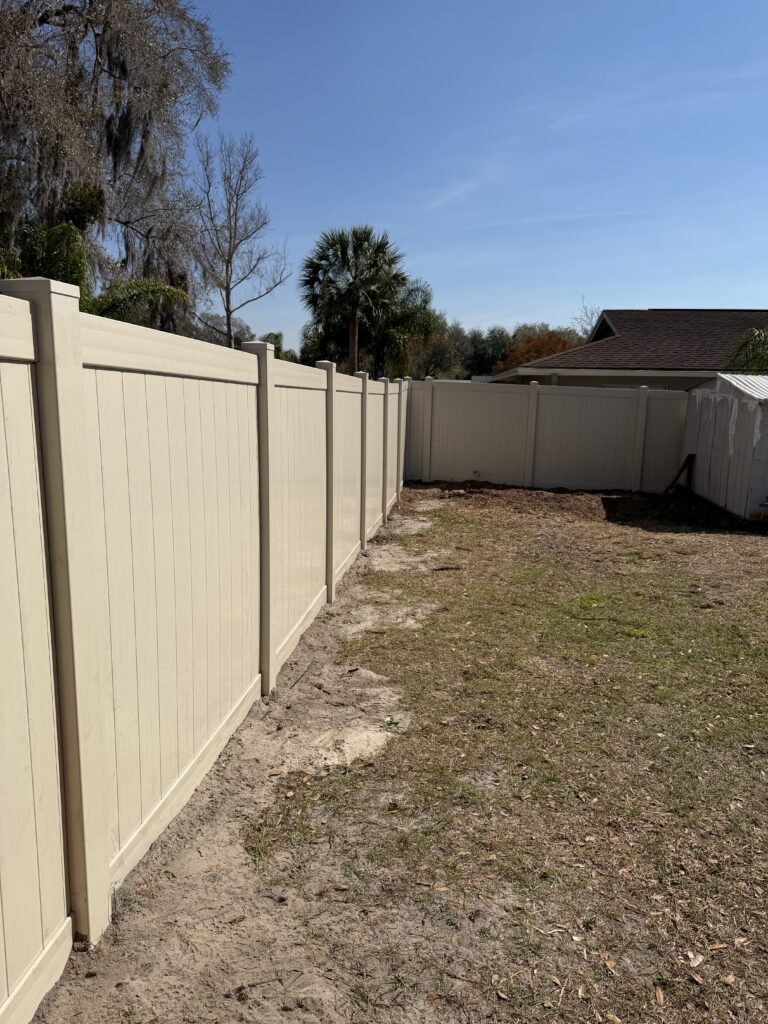
A board on board fence takes a different approach: every picket sits on the same side of the rails, and each new picket overlaps the edges of the boards beside it. The builder installs a base layer of pickets with small gaps between them, then covers each gap with an overlapping picket nailed on top. The overlap is usually one inch or more on each side, which means no gap ever opens up, even as the wood shrinks. This creates a completely solid privacy wall with zero sightlines from any angle. The finished face has an attractive layered texture that casts subtle shadow lines across the fence. From the back side, you see the rails and the flat backs of the pickets, which is the traditional builder side. Some homeowners cap the fence with a top rail and trim board for an upscale estate look. Board on board is widely considered the premium tier of wood privacy fencing in the Orlando market.
The overlapping design directly solves the biggest weakness of standard stockade fences: shrinkage gaps. New pressure treated pine arrives wet from the treatment process and shrinks noticeably as it dries in the Florida sun. On a standard fence, that shrinkage opens quarter inch gaps between pickets within months. On a board on board fence, the one inch overlap absorbs all of that movement, so the fence stays fully private for its entire life. This makes board on board the correct choice for pool enclosures, hot tub areas, and backyards that border busy roads or commercial property. Sound blocking is also better, since the doubled wood layers dampen traffic noise more than a single layer of staggered pickets. Pets that fixate on movement outside the fence calm down behind a solid wall. For total, permanent privacy, no other wood fence style competes.
Board on board construction uses roughly 30 to 40 percent more pickets than a shadow box fence, and that drives both cost and weight. Rails must be robust, typically two by four lumber, because they carry nearly double the picket load. Posts should be four by four at minimum, and many builders upgrade to four by six or steel posts for six foot board on board runs. The solid face catches full wind pressure, so post depth and concrete footings become critical in our storm prone region. A board on board fence built on weak posts will lean after its first serious tropical storm. Fastener count also doubles, and every overlap picket needs nails driven through two layers of wood into the rail. Skilled crews stagger their fastener pattern so the overlapping boards clamp each other flat as they dry. When built correctly, a board on board fence is the strongest and longest lasting wood privacy fence you can buy.
Shadow Box Fence vs Board On Board Fence Materials and Framing Differences
Material selection separates these two fence styles as much as the picket pattern does. Shadow box fences in Central Florida are almost always built from pressure treated pine pickets on pressure treated rails and posts, because the style is positioned as an affordable upgrade over stockade. Board on board projects more often use premium materials like cedar pickets, kiln dried pine, or thicker five quarter boards, since buyers choosing this style are already investing in the top tier. Vinyl manufacturers also produce both profiles; vinyl shadow box panels mimic the staggered look, while solid tongue and groove vinyl panels replicate the board on board effect. Framing differs as well, with shadow box using standard rails and board on board demanding heavier lumber throughout. Gate construction follows the same rule, and board on board gates need steel frames or heavy diagonal bracing to carry their extra weight. Hardware should be hot dipped galvanized or stainless in both cases to survive Florida humidity. These material decisions affect your final price more than most homeowners expect.
Picket dimensions and grades deserve attention on both styles. Standard pickets are five and a half inches wide and five eighths of an inch thick, but premium board on board builds often step up to six inch or eight inch boards for a bolder shadow line. Grade matters because knots weaken pickets and eventually fall out, leaving holes in your privacy wall. Number one grade or select pickets cost more but warp less and look cleaner for years. Shadow box fences can tolerate slightly lower grades since the staggered pattern hides minor defects from casual view. Board on board fences display every picket face prominently, so board quality is immediately visible. Cedar resists rot and insects naturally, making it worth the upgrade for homeowners planning to stay in their home long term. Pressure treated pine remains the value leader when properly sealed and maintained.
Post and footing specifications ultimately decide how long either fence survives Florida weather. Both styles need posts rated for ground contact, set in concrete footings that extend below the loose sandy topsoil common across Orange, Lake, and Osceola counties. Board on board runs benefit from tighter post spacing, often six feet on center instead of eight, to manage the added weight and wind load. Steel posts wrapped with wood trim have become popular for board on board because they never rot at the ground line, which is where wood posts always fail first. Shadow box fences handle standard eight foot spacing well because wind passes through the staggered gaps. Concrete should crown above grade and slope away from the post so water sheds instead of pooling. Skipping these framing details saves a builder money but costs the homeowner years of fence life. Ask any fence contractor to specify post size, depth, and spacing in writing before you sign.
Shadow Box Fence vs Board On Board Fence: Privacy, Cost, and Durability Compared
Once you understand the construction, the practical comparison becomes much easier to evaluate. Privacy, price, wind performance, and maintenance are the four factors that should drive your decision between a shadow box fence and a board on board fence. Neither style is universally better; each one wins in specific situations. A corner lot on a busy Clermont road has different needs than an interior lot in a quiet Ocoee subdivision. Your budget, your HOA rules, and how long you plan to own the home all factor in. This section compares both fence styles head to head so you can match the right style to your property. Honest numbers beat sales talk every time.
The Real Privacy Difference Between Shadow Box and Board On Board Fences
Here is the truth most fence salespeople gloss over: a shadow box fence is semi private, not fully private. Stand directly in front of one and it looks solid, but walk at an angle along the fence line and you can see through the staggered gaps. Anyone moving past your yard on a sidewalk catches flickering glimpses between the boards. From a neighbor’s second story window, the angled sightlines open up even more. For many homeowners this partial screening is perfectly acceptable, especially between friendly neighbors who mainly want to define the property line. But buyers expecting total seclusion around a pool or patio are often disappointed after installation. The gaps also let light and air through, which some people count as a feature rather than a flaw. Know what you are buying before the crew shows up.
A board on board fence delivers absolute privacy from every angle, at every time of day, permanently. The overlapping pickets leave no sightline for a passerby, a neighbor, or anyone at street level to exploit. Even as the boards shrink over their first summer, the overlap keeps the wall solid. This makes board on board the standard recommendation for pool areas, where Florida law and common sense both favor screening. It is also the right call for homes backing up to commercial property, apartment complexes, or high traffic roads around Kissimmee and Four Corners. Families with children or dogs gain real security because outsiders cannot assess what is in the yard. Sound dampening is a bonus, since the doubled wood layer takes a measurable edge off road noise. If privacy is your primary reason for building a fence, board on board wins this category outright.
There is a middle path worth mentioning for buyers torn between the two privacy levels. Some homeowners install shadow box along shared neighbor lines where the two sided look keeps the peace, then switch to board on board along the rear line facing a road or retention pond. Mixing styles on one property is common and completely acceptable when the heights match and the materials coordinate. Landscaping can also close the privacy gap on a shadow box fence, since shrubs planted along the line block the angled sightlines. Another option is adding a lattice or louver top to either style for extra height and screening. A good contractor will walk your property and point out exactly where sightlines are a concern. That kind of site specific advice is worth far more than a generic quote over the phone. Click here to schedule a free fence installation estimate and get a privacy plan built for your actual lot.

Shadow Box Fence vs Board On Board Fence Cost Comparison
Shadow box fencing typically runs 10 to 20 percent more than a basic stockade fence, while board on board runs 20 to 35 percent more than shadow box. In the Orlando market, six foot pressure treated shadow box commonly lands between 28 and 40 dollars per linear foot installed, depending on lumber prices and site conditions. Six foot board on board generally falls between 35 and 55 dollars per linear foot, with cedar and decorative caps pushing the top of that range higher. The gap comes down to material volume and labor time. Board on board uses far more pickets, heavier rails, and often stronger posts, and every overlap board is an extra fastening step. Shadow box installs faster because crews follow a simple alternating rhythm down the line. On a 200 foot backyard, the difference between the two styles can total 1,500 to 3,000 dollars. That is real money, and it should be weighed against how much the extra privacy is worth to you.
Long term cost tells a slightly different story than the upfront quote. Board on board fences tend to outlast shadow box fences by several years because the overlapping boards brace each other against warping and the heavier framing resists storm damage. A fence that lasts 18 years instead of 13 spreads its higher purchase price across more seasons, narrowing the true annual cost. Repairs also differ; replacing a single warped picket is simple on both styles, but shadow box gaps that widen over time can require re spacing entire sections. Board on board rarely develops gap problems at all. Resale value favors board on board too, since buyers touring a home immediately notice a solid premium fence around a pool. Appraisers and real estate agents in the Windermere and Dr. Phillips markets consistently treat quality fencing as a value add. Cheap fencing that fails early is the most expensive fence you can buy.
Several variables move the price on both styles, and honest contractors will explain each one. Fence height matters, since eight foot fences need longer posts, deeper footings, and sometimes engineering approval. Gate count adds cost, especially wide double gates for trailer or boat access, which are common requests in Apopka and Mascotte. Old fence removal, root cutting, and sloped terrain all add labor hours. Permit fees vary by municipality across the Orlando metro, and some HOAs require design approval before work begins. Material market swings also shift lumber quotes month to month, so a written quote with a firm hold period protects you. Get every line item in writing and compare quotes on identical specifications, not just the bottom number. A quote that seems too cheap usually hides thinner pickets, shallower posts, or missing concrete.
Which Fence Lasts Longer in Florida: Shadow Box or Board On Board
Florida is one of the hardest climates in the country on wood fences, and both styles face the same enemies: intense UV, daily summer rain, humidity, termites, and hurricane season winds. Shadow box fences hold a genuine advantage in wind events because air flows through the staggered gaps, reducing pressure on posts and panels. During tropical storms, that permeability can be the difference between a standing fence and a flattened one. Board on board fences present a solid sail to the wind, which is why proper post depth, tighter spacing, and quality concrete are non negotiable for this style. When framed correctly, board on board survives storms fine; when framed cheaply, it fails first. Both styles rely on their weakest point, which is almost always the post at the ground line. Rot and termite damage at grade level topple more Florida fences than any hurricane does. Build the foundation right and either style will serve you well.
Moisture management is where the two styles age differently day to day. Shadow box gaps allow every picket to dry on both faces after our afternoon storms, which slows mildew, algae, and rot. Board on board overlaps trap a thin moisture zone where boards touch, and that contact line is where decay starts first if the fence is never sealed. Sealing or staining every two to three years dramatically extends both styles, but it matters even more for board on board. Cedar handles the moisture contact better than pine thanks to its natural oils. Keeping sprinkler heads aimed away from the fence line is a simple habit that adds years of life. Trimming vegetation off the fence lets air circulate and keeps termite highways away from the wood. A well maintained board on board fence in Central Florida can reach 15 to 20 years; shadow box typically delivers 12 to 15 with the same care.
Repairs and end of life planning deserve a moment of honesty. Every wood fence in Florida will eventually need picket replacements, rail repairs, or post resets, and catching small problems early prevents whole section failures. Leaning posts, soft wood at the ground line, and popped fasteners are the warning signs to watch each spring before storm season. Shadow box repairs are quick because each picket is independently accessible from its own side. Board on board repairs take slightly longer since overlap boards must come off to reach the base layer. When a fence passes roughly 60 percent damage, replacement usually beats repair on cost per year of remaining life. If your current fence is showing its age, click here for our fence repair service and get an honest assessment before hurricane season peaks. Knowing the true condition of your fence now saves you an emergency call in September.
Why You Need a Professional to Build Your Shadow Box or Board On Board Fence
Choosing between shadow box and board on board is only half the decision; who builds it determines how it actually performs. Both styles punish sloppy work, and the failures show up within the first year. Uneven staggering ruins the privacy of a shadow box fence, and weak posts doom a board on board fence in the first strong storm. Permits, property lines, HOA approvals, and utility locates all sit on top of the carpentry itself. A professional crew handles every one of those steps and stands behind the finished fence. The right builder turns a big purchase into a decade plus asset for your home.
The Risks of DIY Shadow Box and Board On Board Fence Installation
DIY fence videos make both styles look simple, but the details separate a straight fence from an eyesore. Shadow box spacing must stay consistent across hundreds of pickets, and a quarter inch of drift compounds into visible sightline gaps. Board on board overlaps must be uniform or the shadow lines wander and the fence looks amateur from the street. Post holes dug too shallow in sandy Florida soil guarantee leaning within two years. Concrete mixed wrong or poured without crowning traps water against the post. Most DIY fences also skip string line grading, so the top of the fence waves up and down across the yard. These mistakes are permanent once the concrete cures.
Legal and safety issues catch DIY builders off guard even more than the carpentry does. Building a fence even a few inches over the property line invites a dispute that can force a full teardown at your expense. Florida law requires calling 811 before digging, and hitting a buried utility line is dangerous and costly. Most Central Florida municipalities require fence permits, and unpermitted fences create problems at resale and after storm damage claims. Pool barrier codes add strict rules on height, gaps, and self closing gates that DIY builds routinely miss. HOAs in communities like Horizon West and Minneola can fine homeowners and demand removal of unapproved fences. A professional handles all of this paperwork as part of the job.
The money math on DIY rarely works out the way homeowners hope. Material costs alone at retail lumber prices often approach a contractor’s wholesale rate, erasing much of the projected savings. Tool rental for augers, nail guns, and concrete mixing adds up fast across a weekend project that stretches into three. Mistakes mean buying lumber twice, and warped retail pickets have high reject rates. Your time has value too, and a 200 foot fence is a brutal multi weekend commitment in July heat. When a DIY fence fails early, the replacement cost lands on top of everything already spent. A professional build with a warranty is almost always the cheaper fence over ten years.

How Professional Installation Protects Your Fence Investment
A professional fence crew starts with the steps homeowners never see in videos: property surveys, utility locates, permit filings, and HOA submissions. Layout is done with string lines and grade checks so the fence runs straight and the top line stays clean across slopes. Posts get set at proper depth with correctly mixed concrete, crowned to shed water. Panels go up plumb, level, and consistently spaced. Gates are hung on reinforced posts with quality hardware that will not sag by Christmas. Every one of these steps directly extends the life of your fence.
Professional builders also buy better materials than what sits in retail racks. Contractor grade pickets are straighter, drier, and more consistent, with fewer knots and less warp. Fasteners are exterior rated ring shanks or coated screws instead of whatever is on the shelf. Crews know which lumber batches to reject on delivery, a skill that saves fences years down the road. Established companies carry insurance, so an accident on your property is their liability, not yours. You also get a warranty backed by a business with a local address, not a handshake.
Speed and cleanliness round out the professional advantage. A trained crew installs in one or two days what a homeowner fights with for a month of weekends. Old fence teardown, haul away, and site cleanup are included, so your yard is usable immediately. Sprinkler lines get flagged and protected instead of sliced by a shovel. Pets and pools stay secured because there is no half finished fence sitting open for weeks. The finished product looks uniform because one experienced team built every section the same way. That consistency is what neighbors notice and what protects your home’s curb appeal.
Why Choose Fence Pros for Your Shadow Box or Board On Board Fence
Fence Pros is based right here in Winter Garden at 700 Tangelo Ct, and we serve homeowners within an hour in every direction. Our crews build shadow box and board on board fences week in and week out across Clermont, Ocoee, Windermere, Kissimmee, Apopka, and the surrounding communities. We know Florida soil, Florida storms, and Florida codes because this is the only market we work in. Every material we install is selected to handle Florida weather, from ground contact rated posts to corrosion resistant hardware. We are focused on clean work, strong builds, and long term results on every single project. That local focus is why our reputation keeps growing across Central Florida.
We take ethos seriously, which means we tell you the truth even when it costs us a sale. If shadow box covers your needs, we will not upsell you to board on board; if your privacy goals demand board on board, we will explain exactly why. Every estimate is free, and every quote spells out post size, depth, spacing, picket grade, and fastener type in writing. Residential and commercial fence services are both in our wheelhouse, so we can handle everything from a backyard pool enclosure to a full commercial perimeter. We handle permits, utility locates, and HOA paperwork so you never chase a form. Our goal is a fence you stop thinking about because it simply works.
Consistent 5 star service is not a slogan for us; it is the standard every crew is held to on every job. We show up when we say we will, we protect your landscaping, and we leave your yard cleaner than we found it. Our warranty is backed by a local company you can actually reach after the check clears. Summer is our busiest season, so schedules fill quickly ahead of peak storm months. Ready to settle the shadow box vs board on board question for your own yard? Call Fence Pros today at (407) 580-8353 or email info@fenceprosorlando.com for your free estimate.