
What To Do When Your Wooden Fence Starts Leaning After A Storm
Florida storms put serious pressure on wooden fences, and a leaning fence after heavy wind or rain is one of the most common problems homeowners face in Winter Garden and surrounding areas. The combination of saturated soil, gusting winds, and aging fence posts often shifts panels out of alignment overnight. Acting quickly matters because a leaning wooden fence can fall, damage property, or let pets escape. The good news is that most leaning fences can be saved with the right repair approach. Knowing what to look for, what to do first, and when to call a professional protects your investment. This guide walks through the steps homeowners should take after a storm leaves their wooden fence tilted or unstable.
Why Your Wooden Fence Is Leaning After A Florida Storm
A wooden fence that leans after a storm usually has a problem at the base, not the panels. Florida’s sandy soil holds water during heavy rain, and saturated ground loosens the grip around fence posts. Strong wind gusts then push the panels sideways, pulling the posts out of plumb. Older fences with rotted posts or weakened concrete footings give way first. Understanding the cause behind the lean helps you choose the right repair instead of patching the symptom. The sections below cover the most common reasons a wooden fence starts leaning after Florida weather events.
Soil Saturation Is A Top Cause Of A Leaning Wooden Fence After A Storm
Florida soil contains high levels of sand and clay, and these soil types lose stability when saturated with rainwater. During a heavy storm, water collects around the base of fence posts and weakens the soil’s grip. The post then begins to shift under the weight of the panels and the force of the wind. A fence that stood straight for years can lean within hours once the ground gives way. This is especially common after tropical storms or back-to-back rain events that keep the soil wet for days. Homeowners often notice the lean only after the storm passes and the ground starts to dry. By that point, the post has already settled into its new position.
Repairing a fence with soil saturation damage requires resetting the post in stable footing. Simply pushing the fence back upright will not hold because the soil cannot support the post on its own. Concrete footings are the most reliable solution for Florida properties because concrete distributes the load and resists shifting. A professional fence repair crew will dig out the old footing, reposition the post, and pour new concrete around it. This process restores the fence to a vertical position and adds long-term stability. Skipping this step almost always leads to the fence leaning again within months.
Drainage around the fence line also plays a role in preventing future lean. Yards with poor drainage allow water to pool near the posts, which weakens the soil over time. Adding a gravel base below the concrete footing helps water drain away from the post. Grading the soil so water flows away from the fence line also reduces saturation. Homeowners in low-lying areas should pay special attention to drainage because their yards retain more water. A fence installed with proper drainage will outlast one set in saturated soil by many years.
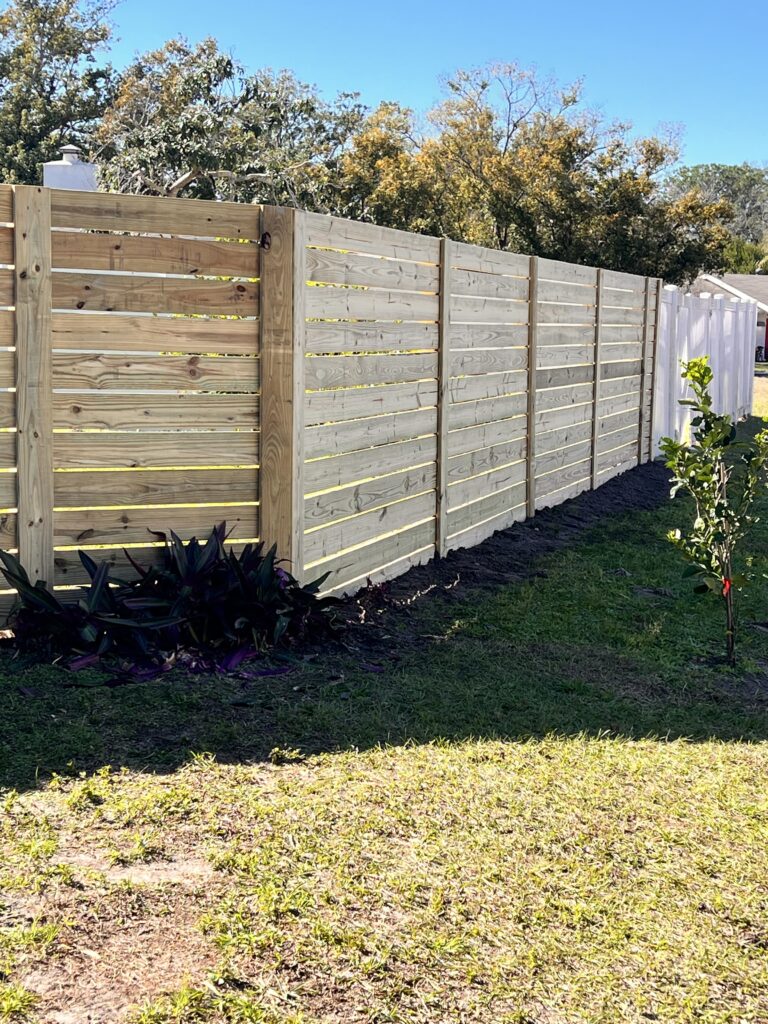
Rotted Posts Cause A Leaning Wooden Fence After A Storm
Wooden fence posts rot from the inside out, and the damage often hides below ground level. Florida’s humid climate and frequent rain create perfect conditions for wood-eating fungi and insects. A post can look fine above the soil while the buried section has turned soft and crumbling. When a storm hits, the rotted section snaps or bends under wind pressure. The fence then leans because the post no longer has the strength to hold the panels upright. This is one of the most common causes of post-storm fence failure in older fences.
Identifying a rotted post requires a close inspection at the ground line. Push against the post firmly; if it moves easily or feels spongy, rot has likely set in. Tapping the post with a hammer can also reveal hollow spots inside the wood. Posts that show cracks, soft spots, or discoloration near the base need replacement, not repair. Sistering a new post next to a rotted one is a temporary fix that often fails again. Full post replacement with pressure-treated lumber is the only reliable solution for serious rot damage.
Preventing post rot starts with the materials and installation method. Pressure-treated pine rated for ground contact resists rot far longer than untreated wood. Setting posts in concrete with a gravel base below helps water drain away from the buried wood. Sealing the top of each post with a cap prevents rain from entering the end grain, which is where rot often begins. Regular inspections every six months catch early signs of decay before they cause a full lean. Homeowners who invest in proper materials and maintenance avoid most rot-related fence failures.
Wind Damage Causes A Leaning Wooden Fence After A Storm
Florida’s storm season brings sustained winds and gusts that exceed what many older fences were built to handle. A wooden fence acts like a sail when wind hits it broadside, and the force transfers down to the posts and footings. Tall privacy fences face the most pressure because they catch the most wind. Even a fence in good condition can lean after a strong storm if the wind load exceeds the post strength. Gusts during hurricanes and severe thunderstorms regularly push panels several degrees off vertical. The damage often shows up as a section of fence that tilts toward one side while the rest stays upright.
The pattern of the lean tells you a lot about the wind damage. A fence that leans in one consistent direction usually took a steady push from a single storm event. A fence with multiple sections leaning at different angles likely suffered repeated wind damage over several seasons. Checking the fasteners between panels and posts shows whether the wind pulled the fence apart at the joints. Loose nails, bent screws, and split rails all point to wind stress. Repairing wind damage often means tightening hardware, replacing fasteners, and resetting the posts that took the most force.
Building a fence that resists wind damage is possible with the right design choices. Adding bracing between posts increases the lateral strength of the fence line. Spacing pickets with small gaps reduces the wind load by letting air pass through. Shorter fences face less wind pressure than tall privacy fences, so choosing the right height matters. Pressure-treated posts set in deep concrete footings hold up better than shallow installations. A professional fence installer in Winter Garden can recommend the best design for your property based on local wind patterns. Need help replacing a wind-damaged fence? Click here for our fence replacement service.
How To Fix A Leaning Wooden Fence After A Storm In Florida
Fixing a leaning wooden fence requires the right tools, materials, and approach for the specific cause of the lean. Some repairs are simple enough for homeowners with basic skills, while others need professional equipment and experience. The first step is always assessing the damage to understand what the fence needs. Rushing into a repair without identifying the root cause often leads to a fence that leans again within weeks. The sections below walk through the steps to evaluate, stabilize, and permanently fix a leaning wooden fence after a Florida storm.
Assess The Damage On A Leaning Wooden Fence After A Storm
Start by walking the entire fence line to see where the lean is worst. Note which posts have shifted and how far the panels are off vertical. Check each post by pushing against it to see how much movement there is at the base. A post that wobbles freely needs immediate attention because the footing has failed. Look for cracked rails, broken pickets, and missing fasteners that may have come loose during the storm. Take photos of the damage for insurance claims if the storm was severe.
Next, inspect the soil around each leaning post for signs of saturation or erosion. Mud, standing water, or soft spots near the base point to drainage problems that need addressing. Probe the soil with a screwdriver to see how deep the soft layer goes. Posts surrounded by soft soil need new footings, not just repositioning. Check the wood at the ground line for rot by pressing into it with a tool or your fingers. Soft, dark, or crumbling wood means the post itself has failed and needs replacement.
Finally, evaluate the scope of the repair before deciding on a fix. A single leaning post in an otherwise solid fence is a straightforward repair. Multiple leaning sections, widespread rot, or major structural damage usually means the fence has reached the end of its life. Older fences that have leaned before are more likely to lean again, so weigh the cost of repeated repairs against full replacement. Homeowners in Winter Garden often find that replacing a failing fence costs less over time than patching it year after year. A professional inspection gives you a clear picture of what makes sense for your property.
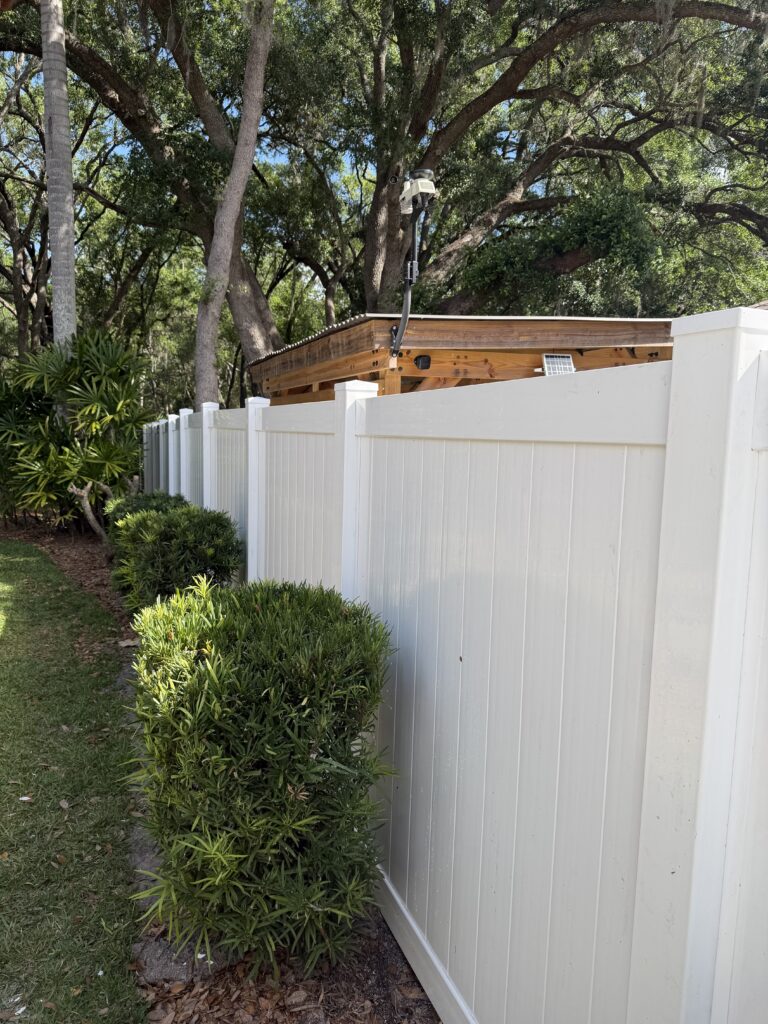
Stabilize A Leaning Wooden Fence After A Storm As A Temporary Fix
If the fence is leaning badly and you cannot repair it right away, stabilize it to prevent further damage. Use sturdy wooden stakes or metal T-posts driven into the ground next to the leaning fence post. Push the fence back to vertical and secure it to the stakes with heavy-duty rope, ratchet straps, or wire. This holds the fence in place and stops it from falling during the next storm. Make sure the stakes are deep enough to resist the weight of the fence; shallow stakes will not hold. Check the temporary supports regularly because they can loosen over time.
Bracing from the inside of the property keeps the fence upright and prevents it from leaning further. Place a long wooden brace at a 45-degree angle from the ground to the top of the leaning post. Anchor the bottom of the brace with a stake driven deep into the soil. Use screws rather than nails to attach the brace because screws hold better under tension. This method works well for short-term stabilization while you wait for repair materials or a professional crew. Remove the brace once the permanent repair is complete to avoid tripping hazards.
Clear away any debris around the leaning fence to prevent additional pressure on the panels. Fallen branches, piles of leaves, and storm debris add weight and trap moisture against the wood. Trim back any tree limbs hanging over the fence because future winds can drop them onto the weakened sections. Keep pets and children away from the leaning section because the fence may collapse without warning. If the lean is severe, mark the area with caution tape to alert visitors. These steps protect both the fence and the people around it until a proper repair happens.
Permanently Fix A Leaning Wooden Fence After A Storm
Permanent repair starts with addressing the root cause of the lean. Reset the affected posts in fresh concrete with a gravel base for drainage. Dig the post hole at least 24 to 36 inches deep depending on the fence height and local soil conditions. Plumb the post with a level before pouring the concrete to make sure it sets in the correct position. Brace the post in place while the concrete cures, which usually takes 24 to 48 hours. Skipping the curing time leads to posts that shift again under load.
Replace any rotted or broken posts with new pressure-treated lumber rated for ground contact. Cutting corners with untreated wood guarantees another failure within a few years. Match the new posts to the existing fence so the repair blends in with the rest of the structure. Reattach the rails and pickets using galvanized screws or fasteners designed for outdoor use. Check that the panels are level and aligned before tightening everything down. A proper repair restores the fence to like-new condition for years of dependable service.
For widespread damage or fences that have leaned more than once, replacement often makes more sense than repair. A new fence built with modern materials and proper installation methods will outlast multiple rounds of patching. Professional installers know how to size posts, set depths, and choose materials that hold up to Florida weather. Working with an experienced local company saves time, money, and stress. Need a leaning fence repaired right? Click here for our fence repair service. The right repair done once is always better than the wrong repair done twice.
Why You Need A Professional For A Leaning Wooden Fence After A Storm
Repairing a leaning wooden fence after a storm involves more than just pushing it back upright. The work requires proper tools, materials, and knowledge of how Florida soil and weather affect fence performance. A professional fence repair company brings the experience needed to diagnose the cause and fix it the right way. Homeowners who try to handle major repairs on their own often end up with the same problem months later. Hiring a trusted local team saves time and protects your property investment. The sections below explain why professional help matters and what to look for when choosing a fence company.
The Risks Of Ignoring A Leaning Wooden Fence After A Storm
A leaning fence is more than a cosmetic problem; it poses real safety risks to your family and neighbors. A fence that falls can land on pets, children, vehicles, or landscaping and cause serious damage. Sharp nails, splintered wood, and broken pickets create hazards even before the fence collapses. Insurance companies may deny claims if the damage came from a fence the homeowner knew was failing. Acting quickly after a storm protects your liability and keeps your property safe.
A leaning fence also stops doing its job, which matters for security and privacy. Pets can escape through gaps that open when panels shift out of alignment. Privacy fences that lean lose their ability to block views and reduce noise from the street. Property lines blur when a fence drifts off vertical, which can lead to disputes with neighbors. Homes with pools must have a working fence to comply with Florida safety codes. A leaning fence near a pool creates legal and safety problems that need immediate attention.
The longer a leaning fence stays untreated, the more damage spreads to the rest of the structure. Panels under stress pull on adjacent posts and rails, weakening the entire fence line. Water seeps into cracks and joints, accelerating rot and decay in nearby wood. A small repair today often prevents a full replacement next year. Calling a professional at the first sign of leaning keeps repair costs manageable and extends the life of the fence.
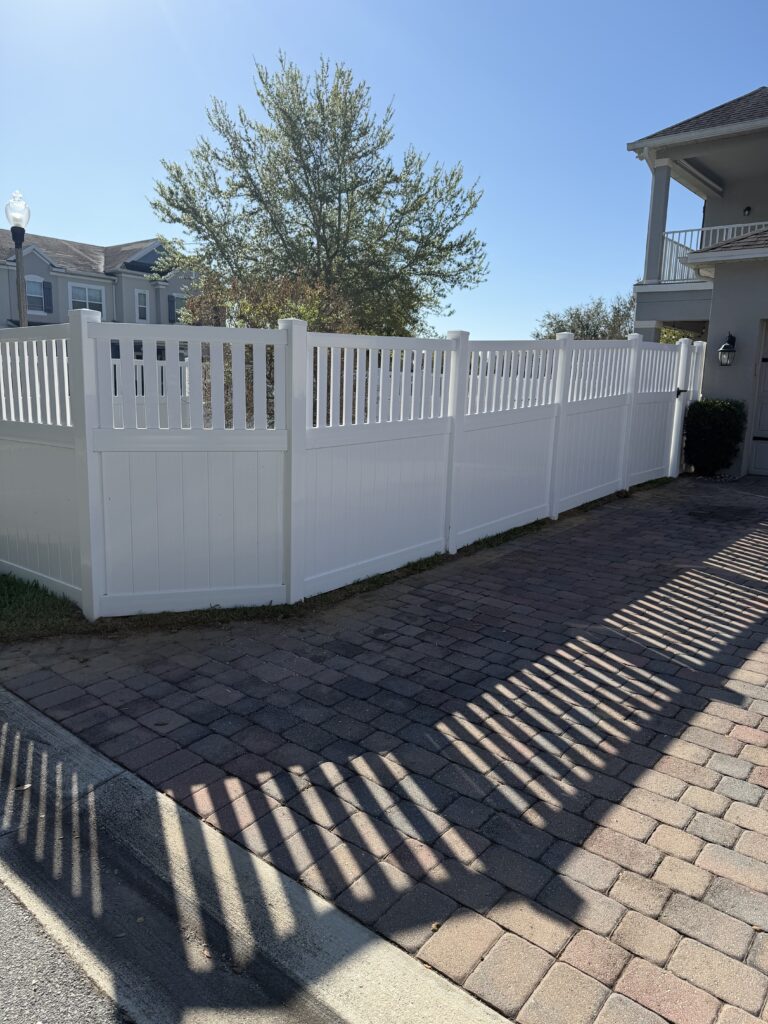
What A Professional Does To Fix A Leaning Wooden Fence After A Storm
A professional fence repair crew starts with a complete inspection of the fence line and surrounding soil. They check every post, rail, and panel for damage that homeowners often miss. Soil conditions, drainage patterns, and root systems all factor into the repair plan. The inspection identifies the root cause of the lean so the repair addresses the real problem. This step alone separates a lasting fix from a temporary patch.
The repair process uses commercial-grade tools and materials that hold up to Florida weather. Pressure-treated lumber, galvanized hardware, and high-strength concrete all play a role in a quality repair. Professional crews bring augers, levels, and bracing equipment to set posts correctly the first time. They know the right depth and spacing for fence posts based on local building codes and soil conditions. The result is a fence that stands straight and stays that way through future storms.
A professional repair also includes cleanup and disposal of damaged materials. Old posts, broken panels, and storm debris all go with the crew when they leave. Homeowners get a finished fence and a clean yard without lifting a tool. Warranty coverage on professional repairs gives peace of mind for years after the work is done. This level of service is hard to match with a do-it-yourself approach.
Why Choose Fence Pros For A Leaning Wooden Fence After A Storm
Fence Pros has built a reputation across Winter Garden, Apopka, Clermont, Ocoee, and surrounding Central Florida communities for honest, high-quality fence work. Brad Jackson owns and operates the company with a focus on clean work, strong builds, and long-term results. Every job starts with a free estimate so homeowners know exactly what the repair or replacement will cost. The team uses materials built for Florida weather, including pressure-treated lumber and corrosion-resistant hardware. Free estimates and consistent five-star service make Fence Pros the trusted choice for residential and commercial fence projects.
Fence Pros serves Winter Garden and surrounding areas within a one-hour drive, including Davenport, Horizon West, Kissimmee, Windermere, and more. Both residential and commercial properties receive the same level of attention to detail. The team handles fence installation, fence repair, and fence replacement with the same commitment to quality on every job. Customers in Altamonte Springs, Casselberry, Forest City, Mascotte, Minneola, Oakland, Pine Hills, Apopka, Dr. Phillips, and Four Corners all benefit from local expertise. Knowing the soil, weather, and code requirements of Central Florida makes a real difference in the final result.
Ready to fix that leaning fence the right way? Call Fence Pros today at (407) 555-0123 for a free estimate on fence repair or replacement in Winter Garden and the surrounding service area. The team is ready to inspect the damage, recommend the best solution, and get the work done with the care your property deserves. Click here to learn more about fence repair services from Fence Pros. Strong builds, clean work, and five-star service are what every customer can expect from start to finish.