
How To Pick The Best Fence Material For Central Florida Humidity
Central Florida humidity puts every fence material to the test. Moisture sits in the air for months, salt drifts in from the coast, and afternoon storms soak yards on a regular schedule. Picking the right fence material here means looking past curb appeal and focusing on how the product handles wet conditions year after year. Homeowners in Winter Garden, Ocoee, and Windermere often find that what works in a dry climate fails fast in our region. This guide breaks down the best fence material options for Central Florida humidity and explains what to look for before you buy. Brad Jackson and the team at Fence Pros build every project with our local climate in mind. Knowing the strengths and weaknesses of each material helps you make a confident choice.
What Makes A Good Fence Material For Central Florida Humidity
A good fence material for Central Florida humidity must resist rot, rust, warping, and mold growth. Our region averages over 70% relative humidity for most of the year, and summer months push that number even higher. Standing moisture on fence posts, panels, and hardware creates the perfect environment for fungal decay and oxidation. Materials that perform well up north often break down here within a few seasons. The right fence stands up to constant moisture, frequent rain, intense UV exposure, and occasional tropical storm winds. Each material on the market has trade-offs, and understanding those trade-offs protects your investment.
The Best Fence Material For Central Florida Humidity Resistance
Vinyl ranks at the top of the list for fence material that resists Central Florida humidity. Vinyl fencing is made from PVC, which does not absorb water, rot, rust, or attract termites. The material holds its shape through humid summers and stays color-stable under strong Florida sun when manufacturers add UV inhibitors. Vinyl posts mounted in concrete footings stay locked in place, and the panels shed water without staining. Cleaning is simple; a garden hose handles most dirt and pollen buildup. For homeowners who want a low-maintenance fence material built for Central Florida humidity, vinyl earns its reputation.
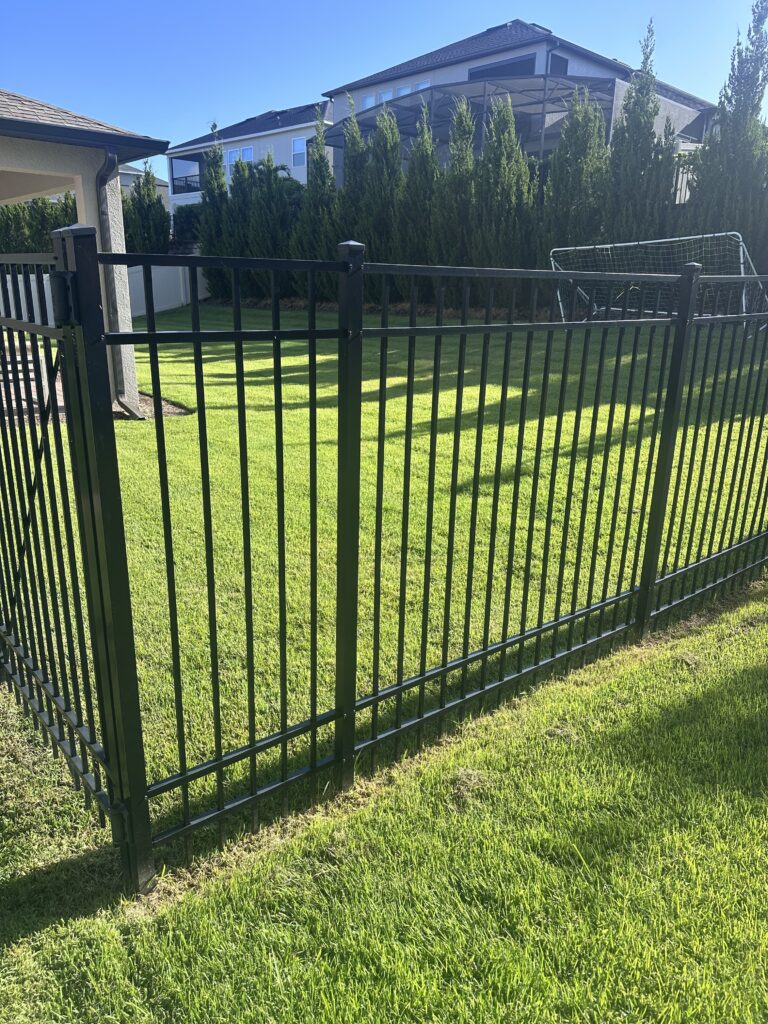
Aluminum is another strong performer for humid climates. Aluminum fencing does not rust the way steel or iron does, which matters during our long rainy season. Powder-coated aluminum panels handle salt air, daily moisture, and direct sunlight without flaking or pitting. The material works well for pool enclosures, decorative front yard borders, and properties that need an open sightline. Aluminum is lightweight, strong, and stands up to wind loads when installed with proper post spacing. For Central Florida humidity, aluminum offers a clean look and long service life.
Pressure-treated wood remains popular, though it demands more care in our climate. Southern yellow pine treated with modern preservatives can handle Florida humidity for many years when sealed and stained on schedule. The wood needs a protective finish every two to three years to fight mold, mildew, and UV damage. Post bases must be set in concrete with proper drainage to prevent ground-level rot. Cedar and cypress are naturally rot-resistant options, though both still benefit from sealing. Wood gives a classic look, and with the right maintenance, it performs well against Central Florida humidity.

The Worst Fence Material For Central Florida Humidity Conditions
Untreated softwood is the worst choice for Central Florida humidity. Raw pine, untreated spruce, and similar woods absorb moisture quickly and begin to rot within months. Fungal growth spreads through the grain, and the structural strength drops fast. Posts set directly in soil without concrete fail even sooner. Homeowners sometimes try to cut costs with untreated lumber and end up replacing the entire fence in under five years. The savings up front do not match the cost of early replacement.
Standard steel without proper coating is another poor match for our climate. Bare steel rusts the moment it meets humid air, and the corrosion eats through pickets, rails, and fasteners. Even painted steel fails when the paint chips and moisture reaches the metal underneath. Wrought iron has the same problem when the protective finish wears thin. These materials need constant attention, and most homeowners do not have time to sand, prime, and repaint a full fence every year. In Central Florida humidity, uncoated steel is a short-term solution.
Low-grade composite materials also struggle in our region. Some budget composites use wood fibers that absorb moisture and swell over time. The panels can bow, crack, or develop mold streaks across the surface. Quality matters with composite fencing, and not every product on the market is built for Florida conditions. Reading the manufacturer warranty and checking the moisture rating is critical before buying. Need help choosing the right material? Click here for our fence installation service.
How Hardware Affects Fence Material Performance In Central Florida Humidity
Hardware is the part of a fence most homeowners forget about, yet it controls how long the fence lasts in Central Florida humidity. Hinges, screws, brackets, and gate latches see the same moisture as the panels. Cheap galvanized hardware rusts and stains the fence material around it. Stainless steel and hot-dipped galvanized hardware cost more up front and last far longer in our climate. The fasteners holding panels to posts must resist corrosion to keep the fence tight and square.
Post anchors and concrete footings also play a major role. A wood or vinyl post set in poor soil without concrete will shift, lean, or sink during the rainy season. Proper footings drain water away from the post base and lock the structure in place. Gravel layers at the bottom of post holes give moisture a path to escape. Professional installers know the depth and width of footings needed for each fence material in Central Florida soil. Skipping this step shortens the fence life by years.
Gate hardware deserves special attention because gates move and carry weight every day. Heavy-duty stainless hinges, self-closing mechanisms, and strong latches handle the wear and tear of constant use. Salt air and humidity cause weak hardware to seize, sag, or break. Choosing the right hardware turns a good fence material into a great long-term investment. For more on what a quality build looks like, click here for our fence replacement service.
How To Match Fence Material To Your Central Florida Property
Picking the right fence material for Central Florida humidity also depends on your property, your goals, and your budget. A backyard pool fence has different needs than a privacy fence along a busy road. A homeowner in Horizon West with a wooded lot faces different conditions than a property near a retention pond in Kissimmee. The material should match the job, the lot, and the long-term plan for the home. Brad Jackson walks every property before recommending a material, since every yard has its own quirks. The right pairing saves money, time, and frustration down the road. A free estimate from Fence Pros gives you a clear picture before any decisions are made.
The Best Fence Material For Central Florida Humidity And Privacy
Vinyl privacy fencing leads the pack for homeowners who want a solid screen that handles humidity. Six-foot and eight-foot vinyl panels block sightlines, reduce noise, and stay smooth through years of weather. The material does not warp, crack, or fade quickly when manufactured with proper UV protection. Privacy panels in vinyl come in white, tan, gray, and wood-grain finishes that fit most neighborhoods. The smooth surface resists mold and rinses clean with a garden hose. For Central Florida humidity, vinyl privacy fencing balances looks and durability.
Pressure-treated wood privacy fencing is the traditional choice and still has a place in our market. Six-foot dog-ear or board-on-board panels give a warm, natural look that vinyl cannot match. The wood needs sealing every couple of years to fight humidity, mold, and UV fade. Posts must be set in concrete with proper depth to handle wind and shifting soil. Cedar boards last longer than pine without treatment, though the price runs higher. With the right care, wood privacy fencing serves Central Florida homes for many years.
Shadowbox and board-on-board styles give privacy with better airflow than solid panels. Airflow matters in our climate because trapped humidity behind a solid fence can stress landscaping and slow drying time after storms. Both styles work in vinyl and wood, and both look attractive from either side of the fence. The added airflow also reduces the wind load during storm season, which lowers stress on posts. Choosing a style that works with the climate makes the fence material last longer. Brad and his team help homeowners weigh the look against the local conditions.
The Best Fence Material For Central Florida Humidity And Pool Areas
Aluminum is the top fence material for pool areas in Central Florida humidity. Pool fencing must meet Florida building codes for height, spacing, and self-closing gates, and aluminum handles those rules with style. The powder-coated finish resists chlorine, salt, and pool chemicals that splash from the deck. Aluminum does not rust, peel, or stain the way other metals do near water. The open picket design keeps sightlines clear so swimmers stay visible from the house. For pool safety and humidity resistance, aluminum is hard to beat.
Vinyl can also work around pools when the design fits the space. Vinyl pool fences need careful spacing and a code-compliant height to meet Florida pool barrier rules. The material handles chlorine splashes and rainfall without breaking down. Many homeowners pair vinyl privacy panels along one side of the pool with aluminum picket sections along the view side. The combination gives privacy where needed and sightlines where they matter. Vinyl performs well as long as the installation meets local code.
Wood is the weakest pool option in Central Florida humidity. Constant splashing, high moisture, and pool chemicals shorten the life of any wood fence near a pool. The wood swells, warps, and grows mildew faster than other materials in this setting. Sealing helps, though the maintenance schedule becomes much tighter. Most pool owners choose aluminum or vinyl to avoid the upkeep. Want a code-compliant pool fence built right? Call Fence Pros for a free estimate and let Brad walk your property.
The Best Fence Material For Central Florida Humidity And Wind Loads
Tropical storms and summer squalls bring strong winds to Central Florida, and fence material must hold up to those gusts. Vinyl panels with steel post inserts give the strongest wind performance among PVC products. The reinforced posts resist bending, and the panels lock into place to spread the load. Quality vinyl rated for high wind zones handles common storm gusts without damage. Lower-grade vinyl without reinforcement can flex or pop loose during a strong storm. Choosing a wind-rated product matters in our region.
Aluminum performs well in wind because the open picket design lets air pass through the fence. The reduced surface area means less force on each post during a storm. Heavy-gauge aluminum with proper post spacing stays straight through storm season. The material does not catch wind the way solid privacy panels do. For homeowners in open lots or near retention areas, aluminum offers strong wind resistance.
Wood fences can survive storms when built correctly. Deep concrete footings, proper post spacing, and quality lumber give the fence the strength to handle gusts. Shadowbox designs allow airflow and reduce wind pressure on the panels. Solid wood privacy fences face the most stress, since the full panel acts like a sail. Working with a builder who knows Central Florida wind patterns makes a major difference. Brad Jackson designs every fence with our local conditions in mind.
Why You Need A Fence Pros Estimate Before Choosing Fence Material
Picking the right fence material for Central Florida humidity is easier with a professional walk-through. Every yard has unique soil, drainage, sun exposure, and wind patterns. A free estimate from Fence Pros gives you straight answers about what works for your property. Brad Jackson and the team have installed fences across Winter Garden, Clermont, Apopka, and the surrounding areas. The experience shows up in the recommendations, the build quality, and the long-term results. A quick visit can save thousands in repair or replacement costs down the road.
A Free Estimate Helps You Compare Fence Material Options
Free estimates from Fence Pros come with no pressure and clear information. Brad walks the property, measures the layout, and reviews the soil conditions before recommending a material. The estimate breaks down vinyl, aluminum, wood, and chain link options based on your goals. Each material comes with a fair price and a clear scope of work. Homeowners get the data needed to choose with confidence.
The estimate also covers permits, HOA requirements, and local codes. Many Central Florida neighborhoods have specific rules about fence height, color, and material. Fence Pros handles those details so the project stays on track. Knowing the rules up front prevents costly changes later.
Material costs shift over time, and current pricing matters. Brad gives accurate, up-to-date numbers based on what is available now. The estimate also includes warranty details for each material option. Click here for our free fence estimate and get the full picture before you decide.

A Free Estimate Shows You The Best Fence Material For Your Lot
Soil conditions vary across Central Florida, and the right fence material depends on what is underground. Sandy soil drains fast and works well with concrete footings. Clay-heavy soil holds water and demands deeper posts with better drainage. Brad checks the soil and recommends the install method that fits the lot.
Drainage patterns also affect material choice. A yard that holds water after storms needs posts and panels rated for constant moisture. Vinyl and aluminum handle wet ground better than untreated wood. The estimate identifies low spots and drainage issues that could shorten fence life.
Sun exposure matters for material color and fade resistance. South-facing fence lines take the most UV punishment in Florida. Vinyl with strong UV inhibitors holds color longer in those spots. Wood needs more frequent sealing on the sunny side. The estimate factors in all of these details.
Why Choose Fence Pros For Your Central Florida Fence Installation
Fence Pros brings local knowledge, honest pricing, and clean workmanship to every project. Brad Jackson owns and operates the company, and his name stands behind every install. The team services Winter Garden, Ocoee, Windermere, Horizon West, Clermont, and the surrounding areas within one hour. High-quality materials built for Florida weather come standard on every job.
Free estimates apply to all fence projects, residential and commercial. The focus stays on clean work, strong builds, and long-term results that hold up to Central Florida humidity. Every customer gets consistent five-star service from the first call to the final walk-through. The reputation built across the region speaks for itself. Ready to pick the best fence material for your home? Call Fence Pros today at (407) 743-8809 for a free estimate, and let Brad and the team handle the rest. Click here for our fence installation service to learn more about the full process. Strong builds, fair prices, and lasting results are one call away.