
Why Aluminum Fencing Is Taking Over Florida Neighborhoods
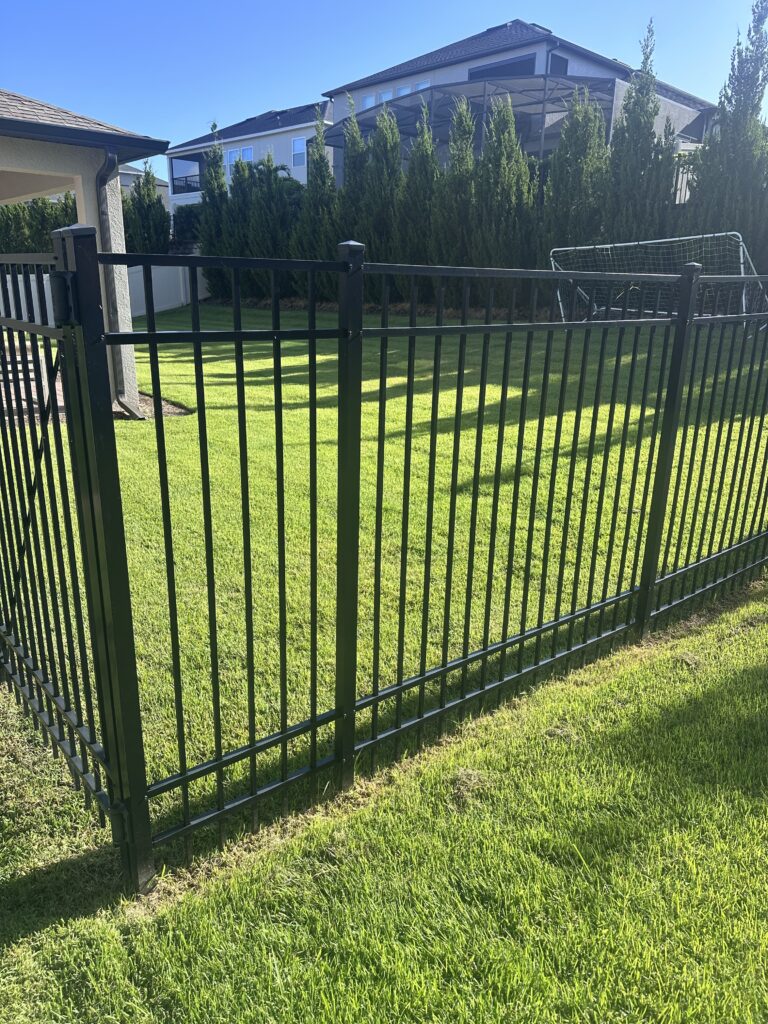
Drive through Horizon West, Windermere, or the newer sections of Winter Garden and you will notice the same thing on almost every corner lot: slim black pickets, clean lines, and no rust streaks anywhere. Aluminum fencing has quietly become the default choice across Central Florida, and the reasons go far beyond looks. Our climate punishes fencing materials in ways that most of the country never deals with, since we combine heavy summer rain, extreme humidity, intense UV exposure, sandy soil, and an active hurricane season that runs through November. Wood rots and warps, raw steel rusts, and chain link starts sagging long before a homeowner expects it to. Aluminum sidesteps almost all of those problems because the metal itself simply cannot rust the way iron and steel do. Add in HOA approval, pool code compliance, and open sight lines that make a backyard feel larger, and the popularity makes sense. This guide breaks down exactly why aluminum has taken over Florida neighborhoods, what separates a quality aluminum fence from a cheap one, and what every homeowner should verify before signing a contract.
Why Aluminum Fencing Holds Up in Florida Heat, Rain, and Storm Season
Material performance in Florida comes down to one question: what happens after five summers of daily thunderstorms and constant humidity? Wood absorbs moisture, swells, dries, and eventually splits at the fasteners. Steel and wrought iron look beautiful on day one, but any scratch in the coating gives moisture a path straight to bare metal, and rust spreads underneath the finish from there. Aluminum behaves differently at a chemical level, which is the single biggest reason it dominates our market. It also carries a major advantage during hurricane season, when open picket construction lets wind pass through instead of catching it like a sail. The sections below cover the three environmental factors that matter most in Central Florida and how aluminum fencing responds to each one.
Aluminum Fencing, Florida Humidity, Rust, and Salt Air
Aluminum does not contain iron, so it cannot produce the orange rust that eats through steel fence posts and chain link bottom rails. When aluminum is exposed to oxygen, it forms a thin oxide layer on the surface almost instantly, and that layer seals the metal underneath instead of flaking away. This is the opposite of how rust behaves on steel, where corrosion lifts the surface and exposes fresh metal to attack in a cycle that never stops. In a climate that sits above 70 percent humidity for much of the year, that difference decides how a fence looks a decade from now. Homeowners in Ocoee, Apopka, and Clermont often replace rusted steel or chain link with aluminum for exactly this reason. The fence stops being a maintenance item and starts being part of the house.
The finish matters just as much as the metal. Quality aluminum fencing is coated with a baked powder finish rather than wet paint, and the better products meet AAMA 2604 performance standards for gloss retention and color fade resistance. That coating is what stands between your black satin pickets and years of Florida UV exposure, which is strong enough to chalk and fade a cheap finish within a few seasons. Powder coating is applied electrostatically and then cured in an oven, so it bonds to the aluminum instead of sitting on top of it like a film. Ask any installer what coating specification they use, because the difference between a budget finish and a premium one does not show up until year four or five. A good finish also resists scratching from string trimmers and mower decks, which is where most fence damage actually starts.
Salt air adds another variable for anyone near the coast or near a saltwater pool. Aluminum resists salt corrosion far better than steel, but it is not completely immune, and prolonged salt exposure can cause surface pitting on unprotected metal. Powder coating handles this, provided the coating stays intact and the hardware is chosen correctly. Galvanic corrosion is the real risk here, and it happens when aluminum makes direct contact with a dissimilar metal like carbon steel in the presence of moisture. Reputable installers use stainless steel or aluminum fasteners and self drilling screws rated for exterior use, never generic hardware store screws. Homeowners who inherit a fence with mismatched hardware often see white powdery corrosion around the screw heads within a year or two, which is a clear sign the wrong fasteners were used.

How Aluminum Fencing Handles Hurricane Season Wind Loads
Hurricane season peaks in Central Florida during September and October, so this is the time of year when fence performance stops being theoretical. Wind load on a fence is a function of surface area, and a solid privacy panel presents a continuous wall for wind to push against. Aluminum picket fencing is roughly 60 to 80 percent open space depending on picket spacing, so most of the wind passes straight through the fence line instead of loading the posts. That reduction in pressure is why aluminum sections routinely survive tropical storm winds that flatten six foot wood privacy fences on the same street. Anyone who walked their neighborhood after recent storm seasons has seen the pattern firsthand. Solid panels lie in the yard while the aluminum next door stands untouched.
The posts still have to be installed correctly for that advantage to hold. Aluminum fence posts are set in concrete footings, and the depth depends on fence height, post spacing, and soil conditions rather than a single universal number. In Central Florida sand, a proper footing needs enough diameter and depth to resist overturning force, which usually means a hole meaningfully wider than the post itself. Cutting corners on footing depth is the most common failure point we see on storm damaged aluminum fencing, and the fence rarely fails at the panel. It leans at the post because the concrete was too shallow or too narrow to hold. Gate posts take the most abuse of all, since a gate applies constant leverage every time someone opens it.
Aluminum also has a repair advantage after a storm. Because the fence is built in sections that attach to posts with brackets or routed rails, a single damaged panel can often be swapped without touching the rest of the run. A wood fence usually requires rebuilding the affected stretch board by board, and matching weathered wood to new wood never looks quite right. With aluminum, a matched replacement section keeps the same color and profile, so the repair blends in. That modularity keeps storm repair costs down and shortens the timeline considerably. If a storm leaves your fence leaning or damaged, click here for our fence repair services and we will assess what can be saved before recommending replacement.
Aluminum Fencing in Sandy Florida Soil and High Water Tables
Central Florida soil is largely sand, and sand does not grip a post the way clay does. It drains fast, shifts under saturation, and offers less lateral resistance, which means footing design carries more weight here than it does in other parts of the country. Aluminum helps because the entire fence weighs a fraction of what an equivalent wood or ornamental steel fence weighs. Less weight means less downward load on the footing and less leverage working against the post over time. That said, light weight does not excuse a shallow hole, and any installer who tells you otherwise is not planning for storm season. Proper footings are the difference between a fence that stays plumb for twenty years and one that needs straightening after every heavy season.
High water tables complicate things further, especially in low lying areas near lakes, retention ponds, and drainage easements. Wood posts sitting in saturated soil rot from the ground up, and even pressure treated lumber eventually gives out at the soil line where moisture and oxygen meet. Aluminum posts do not care. They sit in the same saturated sand without deteriorating, which eliminates the most common failure point in Florida wood fencing entirely. This is why so many lakefront and pond adjacent properties in Kissimmee, Davenport, and Four Corners run aluminum instead of wood. The view stays open and the posts stay sound.
Grade changes are the third soil related factor, and Central Florida yards are rarely perfectly flat. Quality aluminum fencing is available in rackable panels, which means the rails pivot at the picket connections so a section can follow a slope without stair stepping. Rackable sections typically accommodate a specific rise per section, and steeper grades may require stepped installation or custom fabrication. Panels that do not rack leave triangular gaps at the bottom on sloped ground, which matters enormously for pool code compliance and for keeping dogs contained. An experienced installer walks the property and identifies grade issues before ordering material, not after. Getting this wrong on a pool enclosure can mean failing inspection and paying to redo the work.
What Florida Homeowners Should Know Before Buying Aluminum Fencing
Not all aluminum fencing is the same product, and the price spread between the cheapest and the best options is significant for good reason. Wall thickness, alloy, coating specification, hardware quality, and manufacturing method all vary widely across the market. A homeowner comparing two quotes that both say “aluminum fence” may be comparing two very different fences with very different lifespans. There are also code requirements in Florida that apply specifically to fencing around swimming pools, and those rules are not optional. Understanding the specifications before you buy is the best protection against a disappointing result. Here is what actually matters.
Aluminum Fencing Grades, Picket Sizes, and Powder Coating Explained
Most residential aluminum fencing is manufactured from extruded 6063 alloy in a T5 or T6 temper, which balances strength, corrosion resistance, and workability. Manufacturers typically offer residential, commercial, and industrial grades, and the difference comes down to wall thickness of the pickets and rails. Residential grade might use pickets with walls around .050 inches, while commercial and industrial grades step up meaningfully from there. Thicker walls resist denting from lawn equipment, leaning children, and the occasional stray basketball. For a standard backyard perimeter, residential grade is usually adequate, but pool enclosures and gates benefit from a heavier profile. Gates in particular should always be built from a heavier grade, since they absorb far more stress than a fixed section ever will.
Assembly method separates good panels from cheap ones. Better manufacturers use routed rails, meaning each picket passes through a punched opening in the top and bottom rails and is secured internally, which creates a clean look with no visible screws and much greater rigidity. Less expensive panels use surface mounted brackets where pickets attach to the outside face of the rail, and those connections loosen over time. Some premium lines add structural reinforcement inside the bottom rail, which resists sagging on wider sections. Picket spacing is another specification worth confirming, since it determines both the look of the fence and code compliance. Standard ornamental spacing sits just under four inches for a reason we will cover shortly.
Powder coating quality is where many homeowners get surprised years later. The best coatings meet AAMA 2604 or higher standards, which specify performance for color retention, gloss retention, chalking, and adhesion after extended weathering. Lower cost imports often use thinner coatings applied over inadequate surface preparation, and those finishes fade unevenly under Florida sun. Black remains the most requested color across Orange, Lake, Osceola, and Seminole counties, largely because HOA architectural guidelines in communities like Horizon West and Windermere frequently specify it. Bronze and white are also common depending on the neighborhood standard. Always confirm your HOA color and style requirements in writing before ordering, since aluminum fencing is manufactured to order and returns are rarely an option.

Aluminum Fencing and Florida Pool Barrier Code Requirements
Florida takes pool barriers seriously, and the Residential Swimming Pool Safety Act sets specific requirements that fencing must satisfy. The barrier must be at least 48 inches tall measured on the outside of the fence, and it must have no gaps, openings, or protrusions that would allow a young child to crawl under, squeeze through, or use as a foothold to climb. Openings in the barrier cannot allow passage of a four inch diameter sphere, which is why standard ornamental picket spacing is set just below that threshold. The barrier must also be positioned so that it does not create an easy climbing path, meaning horizontal rails and decorative elements have to be considered carefully. These are life safety rules, not stylistic preferences, and inspectors check them closely.
Gates carry their own set of requirements that trip up more homeowners than any other detail. A pool barrier gate must open outward away from the pool, and it must be both self closing and self latching from any position. The release mechanism placement is regulated as well, with specific height requirements designed to keep the latch out of a small child’s reach. Hardware has to actually function reliably, which means spring loaded hinges and magnetic latches rated for the gate weight and exposed to weather without seizing. Cheap gate hardware fails within a season or two in our humidity, and a gate that no longer latches is a code violation and a genuine hazard. This is one place where spending more on hardware pays for itself immediately.
Local jurisdictions add their own permitting requirements on top of state code, and those vary between Orange County, Lake County, Osceola County, Seminole County, and individual municipalities. Setbacks from property lines, corner lot visibility triangles, easement restrictions, and maximum height limits all differ depending on where you live. HOA approval is a separate process from the municipal permit, and both usually need to be handled before work begins. Survey verification matters too, since building a fence over a property line or inside a drainage easement can require removal at your expense. A contractor who handles permitting as part of the job saves you from discovering these issues the hard way. Planning a new pool enclosure or perimeter fence? Click here for our fence installation services and we will walk you through permits, code, and HOA requirements before anything gets built.
Aluminum Fencing Limits and When to Choose Another Material
Aluminum fencing is excellent, but it is not the right answer for every situation, and any honest contractor will tell you so. The most obvious limitation is privacy, since an open picket fence provides zero visual screening by design. Homeowners who want to block sight lines from a neighboring second story window or a busy road need vinyl, wood, or composite instead. Some properties use both, running aluminum along the front and sides where views matter and privacy fencing across the back where screening is needed. Many HOA communities actually require this combination, specifying aluminum for visible frontage and allowing privacy material only behind the building line. Reviewing your community guidelines early prevents an expensive mistake.
Impact resistance is the second consideration. Aluminum is a soft metal compared to steel, so a direct hit from a vehicle, a falling limb, or heavy livestock will bend or break a picket where steel might only deform. For most residential applications this is a non issue, since the fence is not absorbing that kind of force. Properties with large dogs that lean and push, agricultural uses, or commercial sites with vehicle traffic near the fence line may be better served by a heavier commercial grade or a different material entirely. Bollards or landscaping placed strategically can also protect vulnerable sections in parking areas. The good news is that damaged aluminum sections are straightforward to replace.
Cost sits between wood and ornamental steel for most residential projects, and the calculation changes when you account for the full lifespan. Wood typically costs less upfront but requires staining or sealing every two to three years in Florida, plus board replacement as pickets warp and rot. Over fifteen years, that maintenance spending often exceeds the difference in initial price. Aluminum needs occasional rinsing and touch up paint on scratches, and that is essentially the entire maintenance program. For homeowners planning to stay in the house long term, the math usually favors aluminum. For a short term hold or a tight budget where privacy is the priority, other materials may still make more sense.
Why You Need a Professional Aluminum Fencing Contractor in Central Florida
Aluminum fencing looks simple to install, and that appearance leads plenty of homeowners into projects that end badly. The panels themselves go together easily enough, but the parts that determine whether the fence lasts are the parts nobody sees. Footing depth, post alignment, grade handling, gate hardware, code compliance, and permitting all require experience specific to Central Florida conditions. A fence installed on shallow footings will lean after the first serious storm, and a pool enclosure that fails inspection has to be corrected before the pool can be used. Professional installation costs more upfront and costs far less over the life of the fence.
Professional Aluminum Fencing Installation Protects Your Investment
A proper installation starts before anyone digs, with a site walk that identifies grade changes, drainage patterns, tree roots, and utility locations. Underground utility marking is required by law in Florida, and hitting a buried line during post digging creates a dangerous and expensive situation. Property line verification comes next, since fences built in the wrong place cause neighbor disputes and sometimes forced removal. Layout matters too, because post spacing has to work out evenly across the run so you do not end up with an awkward narrow section at the end. Experienced crews plan the entire line before the first hole goes in the ground.
Footings deserve specific attention because they determine everything about long term performance. Post holes need adequate depth and diameter for the fence height and the sandy soil we work in, and the concrete needs to be placed and consolidated properly around each post. Posts must be set plumb and at consistent height, since a fence line telegraphs every small error across its entire length. Gate posts often require larger footings than line posts because of the constant leverage a swinging gate applies. Rushing this stage is the single most common shortcut in the industry.
Finish work separates a professional job from an amateur one. Panels should sit at a consistent height above grade, rackable sections should follow slopes smoothly without gaps at the bottom, and all fasteners should be corrosion resistant and installed cleanly. Gates need to swing freely, latch every time, and stay square without dragging. Caps should be secured, cut ends should be finished, and the site should be left clean with excess soil removed. These details are what you look at every single day for the next two decades.
Aluminum Fencing Repair and Replacement Done the Right Way
Even a well built aluminum fence eventually needs attention, usually after storm damage, a vehicle impact, or years of gate use. The first step in any repair is figuring out what actually failed, because a leaning section is usually a footing problem rather than a panel problem. Replacing a panel on a compromised post just moves the problem down the road. Matching existing material also takes some work, since picket profiles, rail dimensions, and color shades differ between manufacturers and product lines. An experienced crew can source a close match or fabricate a solution that blends in.
Gate issues account for a large share of the aluminum fence repair calls we handle. Hinges wear, self closing mechanisms lose tension, latches corrode, and gates begin to sag or drag against the ground. Most of these problems are fixable with hardware replacement and adjustment rather than a full gate rebuild. On pool enclosures, a malfunctioning self closing gate is a code violation and a safety concern, so it should be corrected promptly rather than propped open. We repair gates on aluminum, vinyl, and wood fencing throughout the Winter Garden area.
Full replacement makes sense when a fence has widespread damage, when the original installation was done poorly, or when a homeowner is upgrading from a failing wood or chain link fence. Replacing rather than repairing lets you correct old layout problems, upgrade to a better grade of material, and bring the fence into compliance with current code and HOA standards. Removal and disposal of the old fence is part of the job, and it should be included in the quote rather than added later. If your existing fence is past the point of patching, click here for our fence replacement services and we will give you a straight assessment of your options.
Why Choose Fence Pros for Aluminum Fencing in Winter Garden and Surrounding Areas
Fence Pros is based at 700 Tangelo Ct in Winter Garden, and we serve homeowners and businesses within about an hour of our shop. That includes Horizon West, Windermere, Ocoee, Oakland, Apopka, Clermont, Minneola, Mascotte, Forest City, Pine Hills, Dr. Phillips, Altamonte Springs, Casselberry, Kissimmee, Davenport, and Four Corners. Working in this specific area every day means we know the local permitting offices, the common HOA requirements, and how Central Florida soil behaves when you dig a post hole in it. That local knowledge shows up in fences that stay straight and pass inspection the first time. We work on both residential and commercial projects.
Our approach is straightforward. We use materials selected to hold up in Florida weather, we install on footings sized for our soil and our storms, and we do clean work that leaves your property better than we found it. Estimates are free on all fence projects, and we give you real numbers rather than a low quote that grows once the work starts. We will also tell you honestly when aluminum is not the right material for your situation. Consistent five star service is the standard we hold ourselves to on every job.
Ready to talk about aluminum fencing for your property? Call Fence Pros at (407) 580-8353 for a free estimate, or email us at info@fenceprosorlando.com and we will get you on the schedule. We will walk your property, review your HOA and code requirements, and give you a clear written quote with no pressure attached. Hurricane season runs through November, so now is a good time to address a leaning fence or a failing gate before the next storm tests it. One conversation is usually all it takes to know exactly where you stand.